Section 8 Housing Voucher Program 2026: Updates & Eligibility

Anúncios
Section 8 Housing Voucher Program 2026: Updates & Eligibility
Anúncios
The landscape of affordable housing is ever-evolving, and for millions of Americans, the Section 8 Housing Choice Voucher (HCV) Program remains a critical lifeline. As we look towards 2026, understanding the latest updates, eligibility requirements, and application processes is paramount for both current participants and those seeking assistance. This comprehensive guide delves deep into the anticipated changes and current state of the Section 8 program, offering practical solutions and insights to navigate this vital housing initiative. Our focus on Section 8 Updates 2026 will provide you with the most current and relevant information.
Understanding the Section 8 Housing Choice Voucher Program
The Section 8 Housing Choice Voucher Program, administered by the U.S. Department of Housing and Urban Development (HUD) through local Public Housing Agencies (PHAs), is the federal government’s largest program for assisting very low-income families, the elderly, and persons with disabilities to afford decent, safe, and sanitary housing in the private market. Participants are free to choose any housing that meets the program requirements. Housing subsidies are paid directly to the landlord on behalf of the participating family, which then pays the difference between the actual rent charged by the landlord and the amount subsidized by the program.
The core objective of Section 8 is to provide housing assistance that promotes residential choice and deconcentrates poverty. Unlike public housing, where families live in units owned and managed by PHAs, Section 8 allows families to find housing in the private market, fostering greater integration into communities and access to better opportunities.
Anúncios
Key Principles of Section 8
- Tenant-Based Assistance: Vouchers are tied to the family, not the unit, allowing them to move without losing their assistance, provided the new unit meets program requirements.
- Affordability: Families typically pay approximately 30% of their adjusted gross income for rent and utilities, with the voucher covering the difference up to a certain limit.
- Portability: In most cases, families can transfer their voucher to another jurisdiction, offering flexibility in choosing where to live.
- Private Market Integration: The program aims to integrate low-income families into diverse neighborhoods, reducing concentrations of poverty.
Anticipated Section 8 Updates 2026: What to Expect
While specific legislative changes can be unpredictable, several trends and ongoing discussions within HUD and Congress suggest potential areas of focus for the Section 8 program in 2026. These updates are often driven by policy goals to improve efficiency, expand access, and address persistent housing challenges. Staying informed about these potential changes is crucial for anyone involved with or seeking to benefit from Section 8.
Potential Policy Shifts and Funding Priorities
One area of ongoing discussion is the perennial challenge of funding. The demand for Section 8 vouchers consistently outstrips supply, leading to long waiting lists in many areas. While a significant increase in funding is always a hope for advocates, more realistic expectations might involve targeted funding initiatives or reallocations. For instance, there could be increased emphasis on vouchers specifically for homeless veterans, individuals transitioning from homelessness, or those in rural areas with limited housing options. These targeted initiatives could represent significant Section 8 Updates 2026.
Another potential shift could involve reforms aimed at streamlining the application and approval process. PHAs often face administrative burdens, and efforts to digitize applications, improve inter-agency communication, and standardize documentation requirements could be introduced. Such reforms would not only benefit PHAs but also make the process less daunting for applicants.
Focus on Housing Quality and Landlord Participation
Maintaining and improving housing quality standards (HQS) is a continuous effort. HUD periodically reviews and updates HQS to ensure that voucher recipients live in safe and healthy environments. In 2026, we might see revised HQS guidelines, possibly incorporating new energy efficiency standards or updated health and safety protocols. These changes could impact both landlords and tenants, requiring properties to meet higher benchmarks.
Encouraging greater landlord participation is another key area. Many landlords are hesitant to accept Section 8 vouchers due to perceived bureaucratic hurdles or concerns about property damage. Potential updates in 2026 could include incentives for landlords, such as expedited inspection processes, risk mitigation funds, or clearer communication channels with PHAs. Initiatives to educate landlords about the benefits of participating in Section 8 could also be strengthened.
Addressing Housing Instability and Homelessness
Given the persistent challenges of housing instability and homelessness across the nation, it’s highly probable that the Section 8 program will continue to be a central tool in addressing these issues. We might see an expansion of emergency housing vouchers (EHVs) or other rapid rehousing initiatives, potentially with expedited processing for individuals and families experiencing homelessness. Collaborative efforts between PHAs, social service agencies, and non-profits could be further emphasized to provide comprehensive support to vulnerable populations. These efforts will be a crucial part of any Section 8 Updates 2026.
Eligibility Requirements for Section 8 in 2026
While specific program rules can be adjusted, the fundamental eligibility criteria for the Section 8 Housing Choice Voucher Program are expected to remain consistent in 2026. These criteria primarily revolve around income limits, family status, and citizenship/immigrant status.
Income Limits
The primary determinant of eligibility is a family’s income. To qualify for Section 8, a family’s income generally must not exceed 50% of the median income for the county or metropolitan area in which the family chooses to live. By law, 75% of new vouchers issued each year must go to families whose incomes do not exceed 30% of the area median income (very low-income). These income limits are set by HUD and vary significantly by location and family size. It’s crucial to check the specific income limits for your area through your local PHA or HUD’s website, as these are subject to annual adjustments.
Family Definition and Status
The term ‘family’ for Section 8 eligibility is broad and can include a single person, a married couple, or a group of individuals related by blood, marriage, or adoption. It can also include unrelated individuals who live together. PHAs will assess the composition of your household to determine the appropriate voucher size and eligibility. Special provisions often exist for the elderly, persons with disabilities, and veterans.
Citizenship and Immigrant Status
To be eligible for Section 8, at least one member of the household must be a U.S. citizen or have eligible immigration status. This requirement is strictly enforced, and applicants will need to provide documentation to verify their status. If a family includes both eligible and ineligible members, assistance may be prorated based on the number of eligible members.
Other Eligibility Factors
- Criminal Background Checks: PHAs conduct criminal background checks on all adult household members. Certain criminal activities, particularly those related to drug-related offenses or violent crimes, can disqualify an applicant.
- Eviction History: A history of eviction from federally assisted housing for drug-related criminal activity may result in denial of assistance.
- Previous Program Participation: Individuals who have been terminated from a federal housing assistance program for serious violations may be denied.
The Application Process for Section 8 in 2026
Applying for Section 8 involves several key steps, and while the general framework remains consistent, some procedural nuances may arise from Section 8 Updates 2026. Patience is a virtue, as waiting lists can be exceptionally long in many areas.
Step 1: Locate Your Local Public Housing Agency (PHA)
The first step is to identify and contact the Public Housing Agency (PHA) in the jurisdiction where you wish to live. You can find a list of PHAs on the HUD website. Each PHA manages its own application process and waiting list. Some PHAs may have online application portals, while others may require in-person applications or mailed forms.
Step 2: Submit an Application
Once you’ve identified your PHA, you will need to complete an application form. This form will request detailed information about your household, including:
- Names, dates of birth, and relationship of all household members.
- Social Security numbers for all members.
- Income and asset information for all adult members.
- Citizenship or eligible immigration status documentation.
- Current housing situation and any special needs.
Be prepared to provide documentation to verify all information. Incomplete applications can lead to delays or denial. It’s critical to provide accurate and truthful information, as misrepresentation can lead to permanent disqualification.
Step 3: The Waiting List
After submitting your application, you will likely be placed on a waiting list. Due to high demand, waiting lists can be open for limited periods, or they can be closed for years. Some PHAs use a lottery system, while others prioritize based on specific criteria, such as homelessness, disability, or veteran status. It is essential to keep your contact information updated with the PHA while on the waiting list. Failure to respond to PHA communications can result in removal from the list.
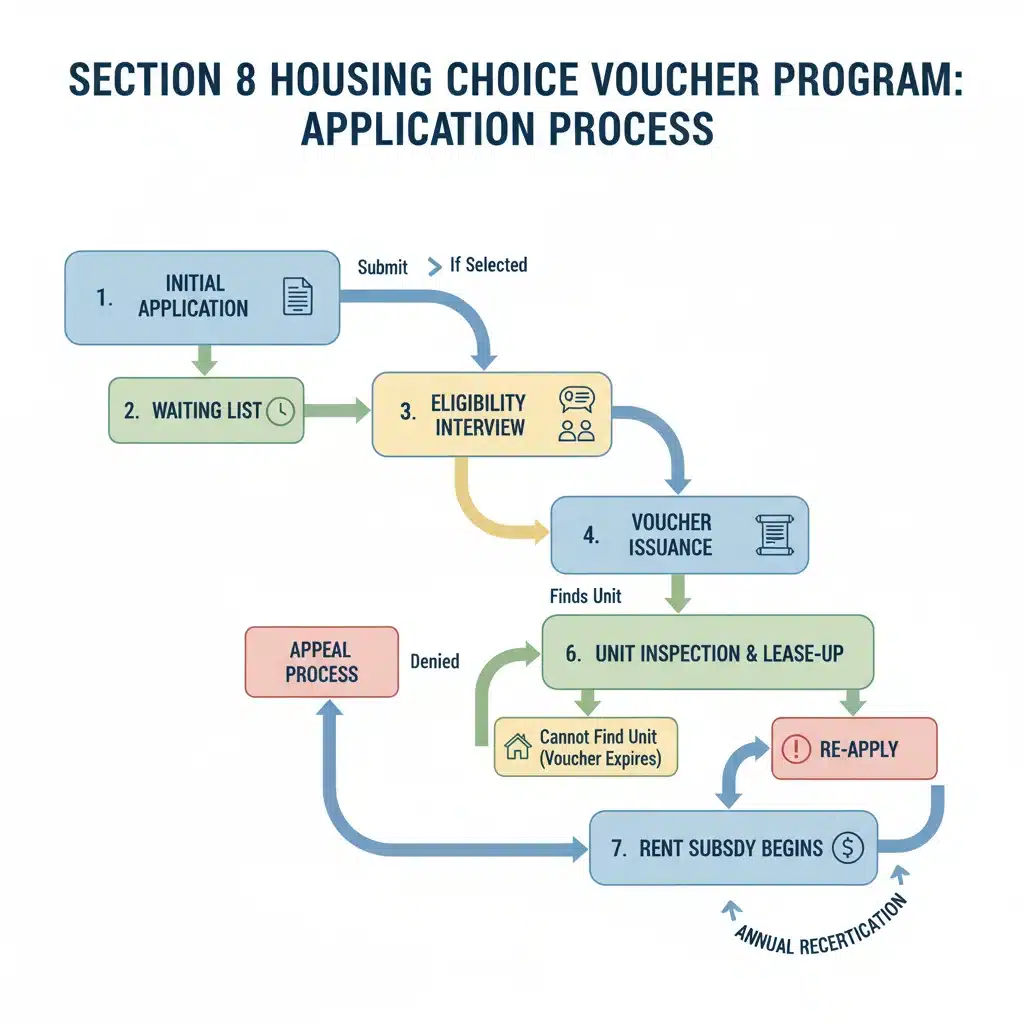
Step 4: Eligibility Interview and Verification
Once your name nears the top of the waiting list, the PHA will contact you for an eligibility interview. During this interview, the PHA will review your application, verify all information, and collect any additional necessary documentation. This may include:
- Birth certificates and Social Security cards.
- Proof of income (pay stubs, tax returns, benefit statements).
- Bank statements and asset verification.
- Proof of citizenship or eligible immigration status.
- Landlord references and criminal background checks.
Step 5: Voucher Issuance and Housing Search
If deemed eligible, you will be issued a housing choice voucher. The voucher specifies the maximum amount of rent the program will subsidize. You will then have a limited time (typically 60 to 120 days) to find a suitable housing unit that meets HQS and falls within the PHA’s payment standards. The unit must be inspected by the PHA to ensure it meets safety and health standards. Once a unit is approved and a lease is signed, the PHA will begin making housing assistance payments directly to the landlord.
Practical Solutions and Tips for Navigating Section 8
Navigating the Section 8 program can be complex, but with the right approach and information, you can increase your chances of success. These practical tips are designed to help you through the process, especially with potential Section 8 Updates 2026 in mind.
Be Prepared and Organized
Gather all necessary documentation well in advance. This includes identification, income verification, asset statements, and any other relevant paperwork. Keeping an organized file will save you time and stress during the application and interview stages. Proactive preparation is key, as any delays in providing documents can set back your application.
Stay Informed About PHA Waiting List Openings
Many PHAs only open their waiting lists periodically, sometimes for very short windows. It is crucial to regularly check the websites of PHAs in your desired areas or sign up for email notifications if available. Local housing advocacy groups and community centers often have information about waiting list openings. Being vigilant about these announcements is vital, as missing an opening can mean waiting years for the next opportunity.
Understand Your Rights and Responsibilities
As a Section 8 participant, you have both rights and responsibilities. Understand the terms of your lease, the PHA’s program rules, and your obligations regarding rent payments, property maintenance, and reporting changes in income or household composition. Familiarize yourself with fair housing laws to protect yourself from discrimination. Being a responsible tenant is crucial for maintaining your voucher.
Seek Assistance from Housing Counselors
HUD-approved housing counseling agencies can provide invaluable assistance. These counselors can help you understand the application process, review your documentation, and provide guidance on landlord-tenant relations. Many services are free or low-cost, and they can be a significant resource, particularly if you encounter challenges or need clarification on specific program rules, including any new Section 8 Updates 2026.
Communicate Effectively with Your PHA
Maintain open and honest communication with your Public Housing Agency. Report any changes in your income, household size, or contact information promptly. If you have questions or concerns, reach out to your PHA for clarification. Good communication can prevent misunderstandings and ensure your assistance continues smoothly.
Explore Portability Options
If you are struggling to find suitable housing in your current jurisdiction, remember that Section 8 vouchers are generally portable. This means you may be able to move to another area, provided the receiving PHA has a voucher program and is willing to accept your transfer. Research potential receiving PHAs and their policies before making any decisions.
Challenges and Considerations for Section 8 in 2026
While the Section 8 program is a cornerstone of affordable housing, it faces ongoing challenges that users and policymakers must consider. Anticipated Section 8 Updates 2026 will likely aim to address some of these issues.
Long Waiting Lists and Limited Funding
The most significant challenge remains the disparity between the number of eligible families and the availability of vouchers. Millions of families are on waiting lists, often for many years, due to insufficient funding. This highlights the ongoing need for increased federal investment in affordable housing programs.
Landlord Participation and Discrimination
Some landlords are reluctant to participate in the Section 8 program, which can limit housing options for voucher holders. Reasons for this reluctance can include perceived administrative burdens, negative stereotypes, or the desire to charge higher market rents. While source-of-income discrimination is illegal in many jurisdictions, it remains a persistent issue in some areas, making housing searches more difficult for voucher recipients.
Housing Quality Standards (HQS) Compliance
Ensuring that housing units meet HQS is critical for resident safety and well-being. However, maintaining compliance can sometimes be a challenge for landlords, and some PHAs may struggle with timely inspections or enforcement. Potential Section 8 Updates 2026 might include enhanced tools or resources for HQS compliance and enforcement.
Geographic Concentration of Poverty
Despite the program’s goal of residential choice, some Section 8 families still end up living in areas with high concentrations of poverty, often due to limited available housing or discrimination. Efforts to promote greater geographic mobility and access to opportunity-rich neighborhoods remain an important policy objective.
The Future of Section 8: Advocacy and Innovation
The future of the Section 8 program in 2026 and beyond will depend heavily on sustained advocacy, innovative policy solutions, and continued commitment from all stakeholders. Advocates for affordable housing consistently push for increased funding, program reforms, and stronger tenant protections. Organizations like the National Low Income Housing Coalition (NLIHC) play a vital role in informing policy discussions and rallying support for programs like Section 8.
Technological Advancements
Technological advancements could play a significant role in improving the efficiency and accessibility of Section 8. Online application portals, digital document submission, and improved data analytics could streamline administrative processes for PHAs and make the application experience more user-friendly for applicants. These technological improvements could be part of the larger Section 8 Updates 2026 strategy.
Partnerships and Collaboration
Stronger partnerships between PHAs, local governments, non-profit organizations, and private developers are essential. Collaborative models that integrate housing assistance with supportive services, job training, and educational opportunities can provide more holistic solutions for families and contribute to long-term stability. The integration of services can significantly enhance the impact of Section 8, moving beyond just providing a roof over one’s head to fostering self-sufficiency.
Addressing Specific Populations
Targeted approaches for specific vulnerable populations, such as veterans, individuals experiencing chronic homelessness, and those with severe mental illness, will likely continue to be a focus. Programs that combine housing vouchers with intensive case management and wrap-around services have proven effective in these areas and may see expansion or further refinement in 2026.
Conclusion: Staying Ahead with Section 8 Updates 2026
The Section 8 Housing Choice Voucher Program is an indispensable component of the nation’s affordable housing strategy. As we look towards 2026, it is clear that while the core mission of providing safe, decent, and affordable housing remains, the program will continue to adapt to meet evolving needs and challenges. By staying informed about potential Section 8 Updates 2026, understanding eligibility requirements, and navigating the application process with diligence, individuals and families can maximize their chances of securing this vital assistance.
For current voucher holders, remaining compliant with program rules and reporting all necessary changes is paramount to maintaining assistance. For those on waiting lists or looking to apply, persistence, meticulous preparation, and seeking out available resources like housing counselors will be your greatest assets. The commitment to affordable housing is a shared responsibility, and by working together, we can ensure that the Section 8 program continues to serve as a beacon of hope for millions of Americans seeking housing stability.
Remember to regularly check the HUD website and your local Public Housing Agency for the most accurate and up-to-date information regarding the Section 8 program, as policies and funding can change. Your diligence in staying informed will be key to successfully navigating the opportunities and challenges presented by the Section 8 Housing Choice Voucher Program in 2026 and beyond.