
Child Tax Credit 2026: How Recent Policy Shifts Could Impact Your Family’s Finances by up to $3,600
The Child Tax Credit (CTC) has long been a cornerstone of financial support for American families, offering much-needed relief to help cover the costs of raising children. As we approach 2026, the landscape of this critical tax benefit is poised for significant changes. These policy shifts could have a profound impact on your family’s finances, potentially altering the amount you receive and who qualifies. Understanding the intricacies of the Child Tax Credit 2026 is not just about tax planning; it’s about securing your family’s financial future.
For many, the CTC represents a substantial portion of their annual financial planning, helping to offset expenses ranging from childcare and education to basic necessities. The discussions surrounding the Child Tax Credit 2026 are already generating considerable debate among policymakers, economists, and families alike. Will the expanded benefits seen during the pandemic make a comeback? Or will we revert to pre-2021 structures? This article delves into the potential scenarios, helping you navigate the complexities and prepare for what’s ahead.
We’ll explore the historical context of the CTC, examine the temporary expansions that provided unprecedented relief, and project the likely trajectory of the credit as 2026 approaches. Our goal is to provide a comprehensive guide that not only informs you about the potential changes but also empowers you to understand how these shifts could directly affect your household budget, potentially increasing your family’s financial stability by up to $3,600 per child.
The Evolution of the Child Tax Credit: A Brief History
To fully grasp the implications of the Child Tax Credit 2026, it’s essential to understand its journey. The CTC was first introduced in 1997 as part of the Taxpayer Relief Act, initially offering a modest $400 credit per child. Its primary aim was to provide tax relief to middle-income families with dependent children. Over the years, the credit has undergone several modifications, reflecting changing economic conditions and political priorities.
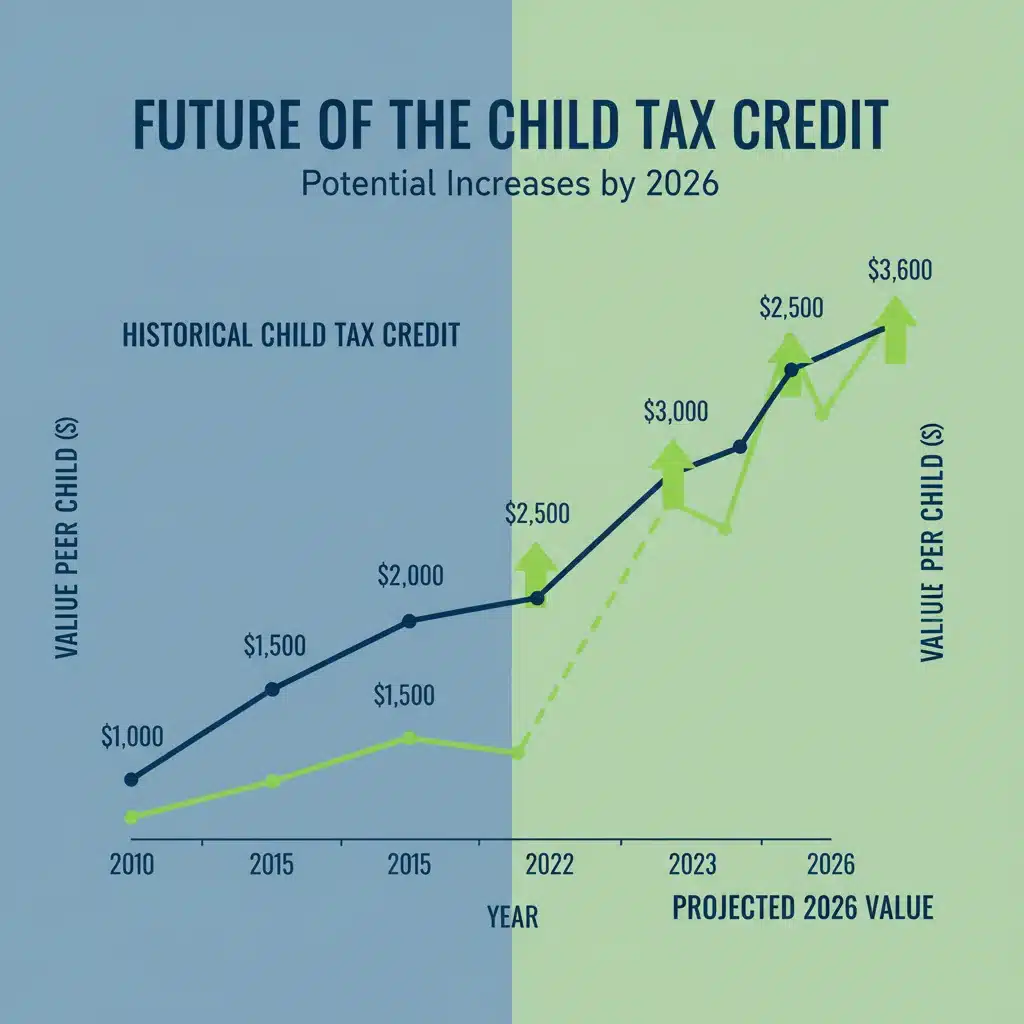
One of the most significant transformations occurred with the Tax Cuts and Jobs Act (TCJA) of 2017. This legislation dramatically increased the maximum credit to $2,000 per qualifying child under the age of 17. It also made a portion of the credit refundable, meaning that even if a family owed no federal income tax, they could still receive up to $1,400 per child as a refund. This expansion marked a crucial step towards making the CTC more impactful for lower-income families.
However, the most impactful, albeit temporary, change came with the American Rescue Plan Act (ARPA) of 2021. This legislation supercharged the CTC, increasing the maximum credit to $3,600 for children under six and $3,000 for children aged six to seventeen. Crucially, ARPA made the credit fully refundable and allowed for advance monthly payments, providing immediate financial assistance to millions of families. This temporary expansion had a demonstrable effect on child poverty rates, lifting millions of children out of poverty and highlighting the credit’s potential as a powerful anti-poverty tool.
The ARPA expansion expired at the end of 2021, and without further legislative action, the CTC reverted to its TCJA parameters for the 2022 tax year and beyond. This reversion meant a reduction in the maximum credit amount, a higher income threshold for full refundability, and the cessation of monthly payments. The impending year 2026 is particularly significant because many provisions of the TCJA, including those related to the CTC, are set to expire. This expiration creates a critical window for Congress to either extend existing provisions, introduce new ones, or allow the credit to revert to pre-TCJA rules, which would have even more drastic implications for families.
Understanding the Current Child Tax Credit Landscape (Pre-2026)
Before we dive into the potential future of the Child Tax Credit 2026, it’s vital to understand its current structure. For the 2023 tax year (filed in 2024) and subsequent years leading up to 2026, the CTC largely operates under the rules established by the TCJA. This means:
- Maximum Credit Amount: Up to $2,000 per qualifying child.
- Qualifying Child Age: The child must be under 17 at the end of the tax year.
- Refundability: Up to $1,600 of the credit is refundable for 2023 (indexed for inflation), meaning you can receive it even if you owe no federal income tax. This refundable portion is often referred to as the Additional Child Tax Credit (ACTC).
- Income Thresholds: The credit begins to phase out for single filers with a modified adjusted gross income (MAGI) above $200,000 and for married couples filing jointly with a MAGI above $400,000.
- No Advance Payments: Unlike the ARPA expansion, there are no monthly advance payments of the CTC under current law. The credit is claimed when you file your annual tax return.
These current rules provide significant assistance to many families, but they fall short of the expanded benefits seen in 2021, particularly for the lowest-income households who may not earn enough to fully qualify for the refundable portion. The income thresholds for full refundability can also be a barrier, as the credit becomes fully refundable only after a certain earnings threshold is met (e.g., $2,500 in earned income for 2023).
Understanding these parameters is crucial for families as they plan their finances for the immediate future. The gap between the $2,000 maximum credit and the $3,600 seen during the ARPA expansion highlights the potential financial relief that could be unlocked if policymakers decide to reinstate or modify the expanded benefits for the Child Tax Credit 2026.

Policy Debates and Potential Scenarios for Child Tax Credit 2026
The year 2026 is a critical juncture for the CTC. The expiration of key provisions from the TCJA opens the door for Congress to reconsider the credit’s structure. Several policy proposals are currently being debated, each with different implications for families.
Scenario 1: Extension of TCJA Provisions
One possibility is that Congress simply extends the current TCJA provisions relating to the CTC. This would mean the credit would continue at $2,000 per child, with the same age and income limitations. While this would prevent a reversion to even lower pre-TCJA amounts, it would not bring back the expanded benefits of 2021. For families hoping for increased support, this scenario would be a disappointment, maintaining the status quo.
Scenario 2: Reinstatement or Modification of ARPA-like Expansions
This is the scenario that could see families receiving up to $3,600 per child, similar to the 2021 expansion. Advocates for this approach emphasize the significant reduction in child poverty and improved family well-being observed during the ARPA period. Key features of such an expansion would likely include:
- Increased Credit Amount: Raising the maximum credit to $3,000 or $3,600 per child, potentially with a higher amount for younger children.
- Full Refundability: Making the entire credit fully refundable, ensuring that even the lowest-income families who owe little to no federal income tax can receive the full benefit. This is a critical component for addressing child poverty.
- No Earned Income Threshold: Eliminating or significantly lowering the earned income requirement to qualify for the refundable portion, making the credit accessible to very low-income families and those with no earned income.
- Advance Monthly Payments: Reintroducing periodic, perhaps monthly, payments to provide families with consistent financial support throughout the year, rather than a lump sum at tax time.
The political feasibility of this scenario is a major point of contention. While there is strong support from some lawmakers and advocacy groups, concerns about the cost and potential impact on the national debt often arise.
Scenario 3: Bipartisan Compromise
Given the political realities, a bipartisan compromise on the Child Tax Credit 2026 is also a strong possibility. This could involve a middle-ground approach that increases the credit beyond the TCJA levels but perhaps not to the full extent of the ARPA expansion. A compromise might include:
- A moderate increase in the maximum credit (e.g., $2,500 or $2,800).
- Partial or enhanced refundability that is more generous than current law but perhaps not fully refundable without an earned income requirement.
- Potential adjustments to income phase-out thresholds to target specific income brackets.
Such a compromise would aim to balance fiscal responsibility with the desire to provide greater support to families. The exact details would depend on negotiations between different political factions.
Scenario 4: Reversion to Pre-TCJA Rules
This is the least desirable scenario for most families. If Congress fails to act and the TCJA provisions expire without an extension or new legislation, the CTC could revert to its pre-2017 structure. This would mean a maximum credit of $1,000 per child, with stricter refundability rules and lower income thresholds. Such a reversion would significantly reduce financial support for millions of families and likely lead to an increase in child poverty.
How the Child Tax Credit 2026 Could Impact Your Family’s Finances
The specific impact of the Child Tax Credit 2026 on your family’s finances will depend heavily on which policy scenario ultimately prevails. However, we can outline the potential effects based on the different possibilities.
If ARPA-like Expansions Return (Up to $3,600 Per Child)
This scenario would be a significant financial boon for families. An increase to $3,600 for younger children and $3,000 for older children, coupled with full refundability and monthly payments, could translate into substantial direct financial relief. For a family with two young children, this could mean an additional $7,200 annually, providing a powerful boost to their budget. This extra income could be used for:
- Childcare Costs: A major expense for working parents, the increased credit could significantly offset these costs.
- Groceries and Basic Needs: Ensuring children have adequate food and other essentials.
- Education Expenses: Funding school supplies, tutoring, or extracurricular activities.
- Healthcare: Covering medical co-pays or prescriptions.
- Debt Reduction: Helping families pay down high-interest debt, improving their overall financial health.
- Savings: Allowing families to build an emergency fund or save for future goals like a down payment on a home or college tuition.
The full refundability aspect is particularly critical for low-income families. Under current rules, many of these families do not earn enough to receive the full refundable portion of the credit. An ARPA-like expansion would ensure that these families, who often need the support the most, receive the maximum benefit, directly impacting child poverty rates and economic mobility.
If TCJA Provisions are Extended (Up to $2,000 Per Child)
An extension of the current rules would mean continued support, but without the significant boost experienced in 2021. While $2,000 per child is still a valuable credit, the lack of full refundability for the lowest earners and the absence of monthly payments mean its impact would be less transformative than the expanded version. Families would continue to benefit, but the financial relief would be more modest, and the credit would remain less accessible to those at the very bottom of the income scale.
If Pre-TCJA Rules Return (Up to $1,000 Per Child)
This scenario would represent a substantial financial setback for millions of families. A reduction to $1,000 per child would cut the credit by half compared to current levels and by more than two-thirds compared to the ARPA expansion. This decrease would strain family budgets, potentially increasing financial stress and poverty rates. Families would have significantly less disposable income, affecting their ability to cover essential expenses and invest in their children’s futures.
Who Qualifies for the Child Tax Credit in 2026? (Projected)
Eligibility for the Child Tax Credit 2026 will, of course, hinge on the final legislative outcome. However, some core requirements are likely to remain consistent, while others are subject to change based on policy shifts.
Likely Consistent Requirements:
- Age Test: The child must be under a certain age at the end of the tax year. Under current law, this is 17. An expansion might lower this to 18, or even 19 or 24 if the child is a student, as was proposed in some ARPA discussions.
- Relationship Test: The child must be your son, daughter, stepchild, foster child, brother, sister, half-brother, half-sister, stepbrother, stepsister, or a descendant of any of them.
- Residency Test: The child must have lived with you for more than half the year.
- Support Test: The child must not have provided more than half of their own support for the year.
- Joint Return Test: The child cannot file a joint return for the year (unless filed only to claim a refund of withheld income tax or estimated tax paid).
- Citizenship Test: The child must be a U.S. citizen, U.S. national, or U.S. resident alien.
Key Variables Subject to Change for 2026:
- Age Limit: As mentioned, whether the age limit remains under 17 or expands to 18 or even older (for students) will significantly impact eligibility for families with older children.
- Income Thresholds for Phase-Out: Current law phases out at $200,000 (single) and $400,000 (married filing jointly). An expansion might raise these thresholds or introduce different phase-out structures.
- Income Thresholds for Refundability: Under current law, the refundable portion (ACTC) requires a certain amount of earned income ($2,500 for 2023). A fully refundable CTC, as seen in ARPA, would eliminate this barrier, making the credit accessible to the lowest-income families.
- Credit Amount Per Child: This is the most significant variable, ranging from $1,000 (pre-TCJA), $2,000 (current TCJA), to $3,000/$3,600 (ARPA expansion).
Families should closely monitor legislative developments regarding these variables. The difference between qualifying for a $1,000 credit versus a $3,600 credit could be substantial, directly impacting financial stability and planning for the Child Tax Credit 2026.
Strategies for Families to Prepare for Child Tax Credit 2026 Changes
While the exact form of the Child Tax Credit 2026 remains uncertain, families can take proactive steps to prepare for potential changes and optimize their financial situation.
1. Stay Informed and Monitor Legislative Developments
The most crucial step is to stay updated on congressional discussions and potential legislative proposals. Follow reputable news sources, financial news outlets, and government publications (like IRS announcements) for the latest information. Understanding the political climate and the likelihood of different scenarios can help you anticipate changes.
2. Review Your Eligibility Annually
Even under current rules, your eligibility for the CTC can change based on your income, the age of your children, and your filing status. Make it a practice to review the CTC requirements each year when preparing your taxes. This will ensure you are claiming the maximum credit you are entitled to under current law.
3. Optimize Your Tax Withholding
If advance payments are reintroduced for the Child Tax Credit 2026, you may have the option to adjust your tax withholding (Form W-4) to account for these payments. This can help manage your cash flow throughout the year. If advance payments are not available, ensuring your withholding is accurate can prevent underpayment penalties or a surprisingly small refund.
4. Maintain Accurate Financial Records
Good record-keeping is always essential for tax purposes. Keep organized records of your income, dependents’ information (Social Security numbers, birth certificates), and any other relevant financial documents. This will streamline the process of claiming the CTC and help you verify eligibility if there are any changes to requirements.
5. Consult with a Tax Professional
For complex financial situations or if you have specific questions about how potential changes to the Child Tax Credit 2026 might affect you, consulting with a qualified tax professional is highly recommended. They can provide personalized advice, help you understand the nuances of the tax law, and assist with tax planning strategies.
6. Build an Emergency Fund
Regardless of the outcome of the CTC debates, having an emergency fund is a cornerstone of sound financial planning. This fund can provide a buffer against unexpected expenses and help your family weather any financial uncertainties, including potential reductions in tax benefits. Aim for at least three to six months’ worth of essential living expenses.
7. Explore Other Available Benefits
Remember that the CTC is just one of many potential tax credits and benefits available to families. Research and explore other credits you might qualify for, such as the Earned Income Tax Credit (EITC), Credit for Child and Dependent Care Expenses, or education credits. Maximizing all available benefits can help offset any potential changes to the Child Tax Credit 2026.
The Broader Economic Impact of the Child Tax Credit
The discussions surrounding the Child Tax Credit 2026 are not just about individual family finances; they also touch upon broader economic and societal impacts. The temporary expansion of the CTC in 2021 provided a real-world experiment demonstrating its powerful effects:
- Poverty Reduction: Studies by organizations like the Columbia University Center on Poverty and Social Policy estimated that the expanded CTC lifted 3.7 million children out of poverty in 2021. This highlights the credit’s potential as a direct and effective tool for poverty alleviation.
- Economic Stimulus: The monthly payments injected billions of dollars directly into the economy, boosting consumer spending and supporting local businesses. For many families, these payments were used for necessities, ensuring that the money circulated quickly within communities.
- Improved Child Well-being: Beyond financial metrics, the expanded credit was linked to improvements in children’s nutrition, health, and educational outcomes. Families reported being better able to afford healthy food, medical care, and learning resources.
- Reduced Food Insecurity: Data showed a significant drop in food insecurity among families receiving the expanded CTC, underscoring its role in addressing basic needs.
The potential for the Child Tax Credit 2026 to re-ignite these positive impacts is a central argument for its expansion. Conversely, allowing the credit to revert to lower amounts could reverse some of these gains, potentially increasing child poverty and creating greater economic instability for vulnerable households.
Policymakers will weigh these economic and social benefits against concerns about federal spending and the national debt. The debate over the Child Tax Credit 2026 is, therefore, a microcosm of larger discussions about the role of government in supporting families and shaping economic outcomes.
Conclusion: Navigating the Future of the Child Tax Credit 2026
The Child Tax Credit 2026 stands at a pivotal moment. The decisions made by Congress in the coming years will significantly shape the financial landscape for millions of American families. Whether the credit reverts to pre-TCJA levels, remains at current TCJA levels, or sees a renewed expansion similar to the American Rescue Plan Act, the impact on your household budget could be substantial – potentially a difference of thousands of dollars annually.
While the uncertainty can be daunting, proactive engagement and informed planning are your best tools. By staying abreast of legislative developments, understanding the various policy scenarios, and preparing your family’s finances, you can position yourselves to adapt to whatever changes the future holds for the Child Tax Credit. Remember that the potential for up to $3,600 in support per child is a powerful incentive to remain vigilant and advocate for policies that strengthen family economic security.
The goal of the Child Tax Credit has always been to support families and invest in the well-being of children. As 2026 approaches, the national conversation will undoubtedly intensify, and your understanding of these crucial policy shifts will be invaluable in navigating your family’s financial journey.