
Estate Planning in 2026: Updated Federal Gift and Estate Tax Exemptions and How They Impact Your Legacy Planning
As the calendar pages turn towards 2026, a significant shift in the landscape of estate planning is on the horizon. The federal gift and estate tax exemptions, currently at historic highs, are slated to undergo substantial changes. These modifications, primarily due to the sunsetting provisions of the Tax Cuts and Jobs Act (TCJA) of 2017, will have a profound impact on how individuals and families approach their wealth transfer strategies and legacy planning. Understanding these impending changes, particularly regarding the estate tax exemptions 2026, is not merely a matter of financial prudence; it’s a critical step in securing your family’s future and ensuring your wishes are honored.
For years, estate planning professionals have advised clients based on the generous exemption amounts established by the TCJA. However, as we draw closer to January 1, 2026, these elevated figures are set to revert to pre-TCJA levels, adjusted for inflation. This means that many estates that previously fell below the taxable threshold may suddenly find themselves subject to federal estate taxes. This article will delve into the specifics of these anticipated changes, explore the potential implications for various estate sizes, and, most importantly, outline proactive strategies you can implement now to mitigate future tax burdens and optimize your legacy planning.
The Current State of Federal Gift and Estate Tax Exemptions
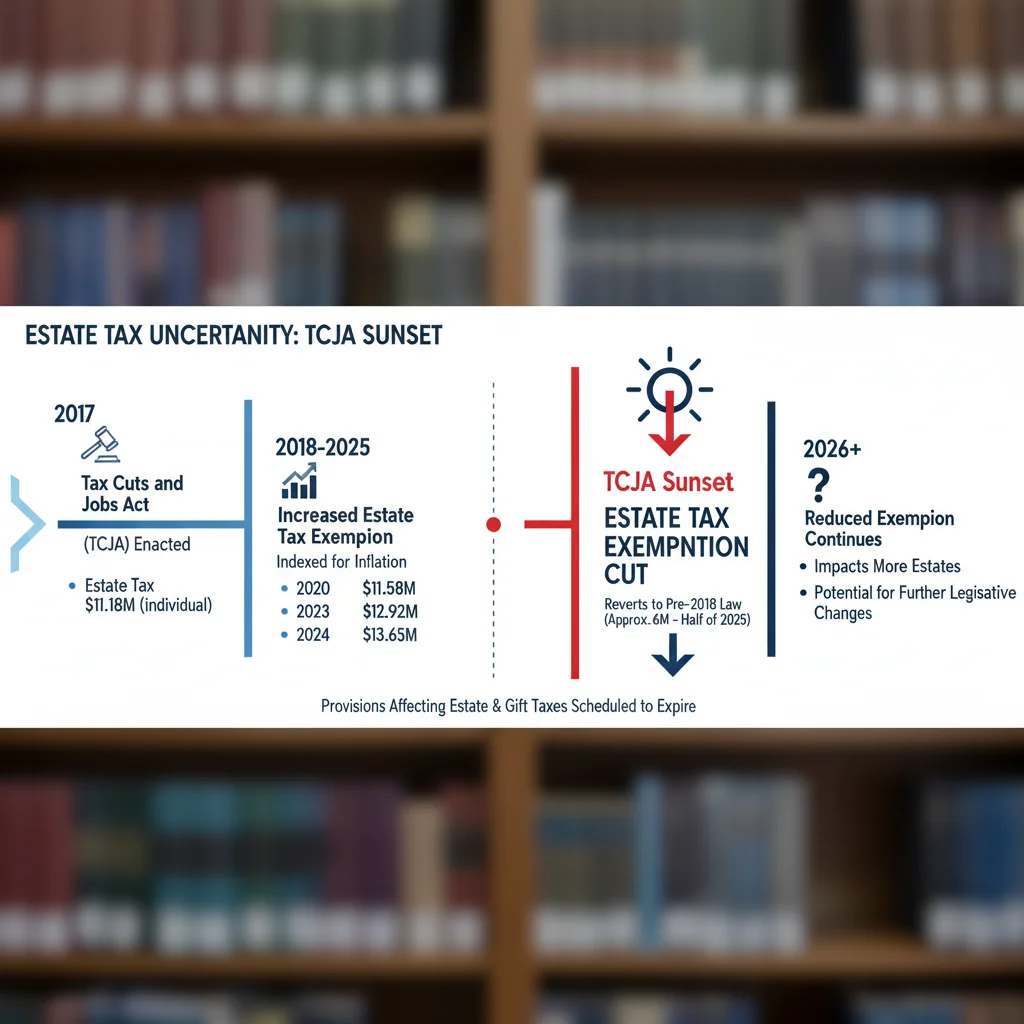
Before we look ahead to 2026, it’s essential to understand where we currently stand. The TCJA dramatically increased the federal estate and gift tax exemption to $11.18 million per individual in 2018, indexed for inflation. For 2024, this amount stands at an impressive $13.61 million per individual, meaning a married couple can shield over $27 million from federal estate and gift taxes. This unprecedented level of exemption has allowed a vast majority of Americans to pass their wealth to heirs without incurring federal estate tax liability.
The federal estate tax is a tax on your right to transfer property at your death. It applies to the fair market value of your assets at the time of your passing. The federal gift tax, on the other hand, is a tax on the transfer of property by one individual to another while receiving nothing, or less than full value, in return. These two taxes are unified, meaning the lifetime exemption amount applies to both gifts made during your lifetime and transfers at death. Any gifts made above the annual gift tax exclusion (which is $18,000 per donee in 2024) reduce your lifetime exemption.
The current high exemption amounts have provided a unique window of opportunity for high-net-worth individuals to engage in significant wealth transfer strategies, such as making large lifetime gifts, establishing complex trust structures, and utilizing various charitable giving vehicles, all while remaining under the federal tax radar. However, this favorable environment is temporary, making the focus on estate tax exemptions 2026 all the more critical.
What Happens in 2026: The Sunset of the TCJA Provisions
The core of the impending change lies in the sunset provision of the TCJA. When Congress passed the TCJA in 2017, many of its individual tax provisions, including the increased estate and gift tax exemptions, were set to expire on December 31, 2025. Unless Congress acts to extend them, on January 1, 2026, these exemptions will revert to their pre-2018 levels, adjusted for inflation. While the exact figure for 2026 is yet to be determined, it is widely anticipated to be approximately $7 million per individual, or roughly half of the current exemption.
This reduction will have significant consequences. Estates that are currently well below the federal estate tax threshold may suddenly find themselves facing substantial tax liabilities. For example, an individual with a $10 million estate who would currently pay no federal estate tax could, under the 2026 rules, face a tax on approximately $3 million (assuming a $7 million exemption). With the top federal estate tax rate at 40%, this could translate to a tax bill of $1.2 million. This drastic change underscores the urgency of reviewing and potentially revising existing estate plans.
It’s important to remember that these are federal exemptions. Many states also impose their own estate or inheritance taxes, often with much lower exemption thresholds. The federal changes will not directly impact state-level taxes, but they add another layer of complexity to overall estate planning, making a comprehensive review essential.
Who Will Be Most Affected by the Changes in Estate Tax Exemptions 2026?
While the reduction in exemptions will affect a broader range of estates than before, certain individuals and families will feel the impact more acutely:
- High-Net-Worth Individuals: Those with estates currently valued between $7 million and $13 million (or $14 million and $26 million for married couples) will be most directly impacted. These are the individuals who currently benefit from the higher exemption but will likely be subject to federal estate tax under the new rules.
- Families with Significant Illiquid Assets: Estates primarily composed of real estate, closely held businesses, or other non-cash assets may face liquidity challenges when it comes to paying estate taxes. Selling assets quickly to cover tax liabilities can lead to depressed values or forced sales.
- Individuals with Outdated Estate Plans: Those who created their estate plans before the TCJA or haven’t reviewed them since will likely find their plans no longer align with the new tax landscape.
- Business Owners: Succession planning for family businesses becomes even more critical. The reduction in exemptions could make it more difficult to transfer a business to the next generation without significant tax consequences.
The impact will not be uniform, and personalized advice is crucial. However, the general trend indicates a need for more sophisticated planning strategies for a larger segment of the wealthy population.
Proactive Strategies for Navigating the New Landscape
Given the impending changes to estate tax exemptions 2026, now is the time to act. Proactive planning can help minimize potential tax liabilities and ensure your legacy is preserved according to your wishes. Here are several strategies to consider:
1. Maximize Lifetime Gifting Before 2026
One of the most effective strategies is to utilize the current higher gift tax exemption before it sunsets. The IRS has provided anti-clawback regulations, ensuring that gifts made under the current higher exemption amounts will not be clawed back into your estate for tax purposes if the exemption decreases in the future. This provides a unique opportunity to transfer significant wealth out of your estate tax-free.
- Large Lifetime Gifts: Consider making substantial gifts to heirs, such as children or grandchildren, up to your remaining lifetime exemption amount. This reduces your taxable estate and shifts future appreciation of those assets out of your estate.
- Annual Exclusion Gifts: Continue to utilize the annual gift tax exclusion ($18,000 per donee in 2024). These gifts do not count against your lifetime exemption and can significantly reduce your estate over time.
- Gifts for Education and Medical Expenses: Payments made directly to an educational institution for tuition or to a medical provider for qualified medical expenses are not considered taxable gifts and do not count against your annual exclusion or lifetime exemption.
2. Review and Update Your Estate Plan
Your existing will, trusts, and other estate planning documents may no longer be optimal under the new tax regime. It is imperative to review them with an experienced estate planning attorney.
- Wills and Trusts: Ensure your will accurately reflects your wishes and considers potential tax implications. If you have existing trusts, such as bypass trusts or marital trusts, understand how the lower exemption might affect their funding and tax efficiency.
- Portability Election: For married couples, remember the portability election, which allows the surviving spouse to use any unused portion of the deceased spouse’s federal estate tax exemption. While useful, it may not fully address the impact of a reduced exemption.
- Beneficiary Designations: Check beneficiary designations on life insurance policies, retirement accounts, and other assets to ensure they align with your overall estate plan and tax strategy.
3. Consider Advanced Planning Techniques
For those with larger estates, more sophisticated strategies may be necessary to mitigate the impact of reduced estate tax exemptions 2026.
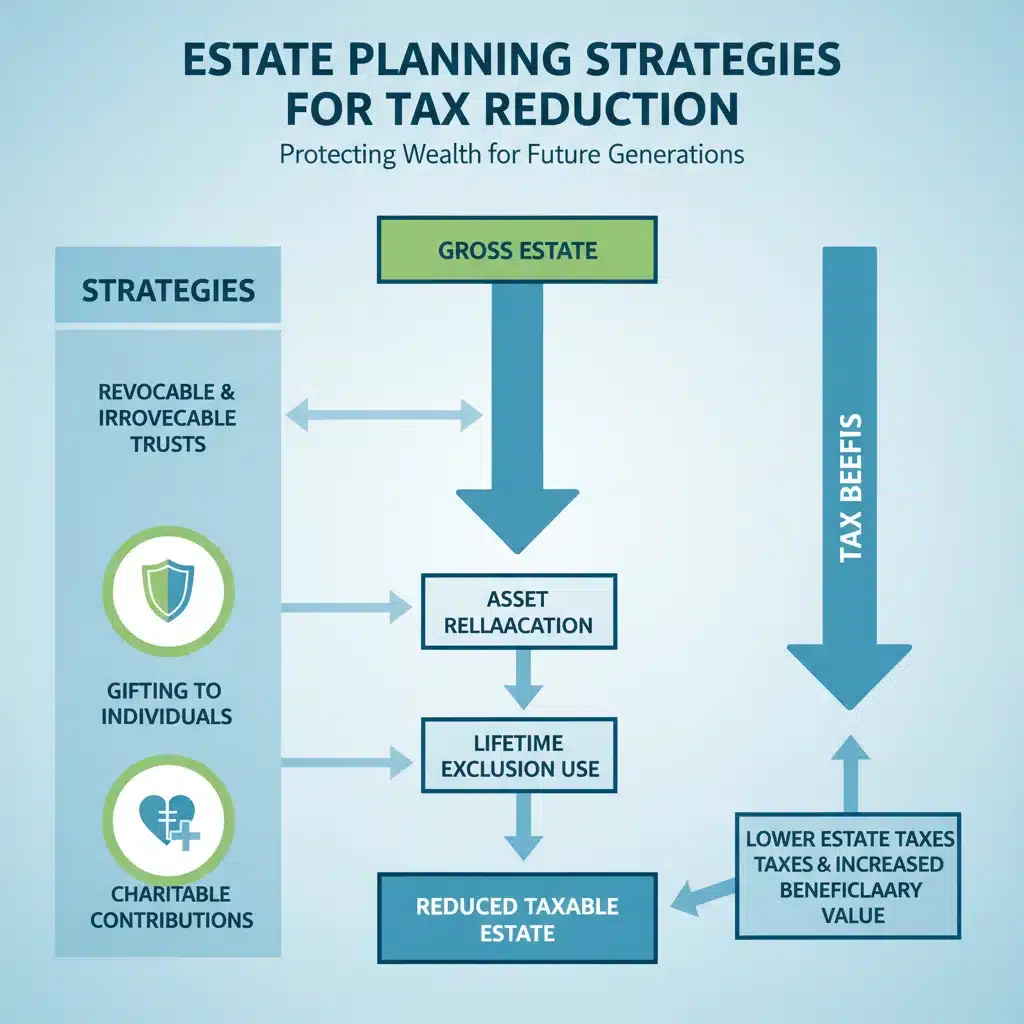
- Irrevocable Trusts: These trusts, such as Irrevocable Life Insurance Trusts (ILITs), Grantor Retained Annuity Trusts (GRATs), or Qualified Personal Residence Trusts (QPRTs), can remove assets from your taxable estate while providing benefits to your beneficiaries.
- Family Limited Partnerships (FLPs) and Limited Liability Companies (LLCs): These entities can be used to transfer wealth to future generations at a discounted value, reducing the overall taxable estate.
- Charitable Giving Strategies: Charitable remainder trusts (CRTs), charitable lead trusts (CLTs), and donor-advised funds can provide income to you during your lifetime, generate income tax deductions, and remove assets from your taxable estate while supporting causes you care about.
- Installment Sales to Grantor Trusts: This technique allows you to sell appreciated assets to an intentionally defective grantor trust in exchange for a promissory note. The appreciation on the assets after the sale grows outside of your estate, and the interest payments on the note are often designed to be tax-neutral.
4. Optimize Life Insurance Planning
Life insurance can play a critical role in estate planning, especially in a higher estate tax environment. It can provide liquidity to cover estate taxes without forcing the sale of other assets. If owned properly (e.g., within an ILIT), the death benefit can be excluded from your taxable estate.
5. Business Succession Planning
For business owners, the reduced exemptions can complicate the transfer of a family business. Early and careful planning is essential, including strategies like buy-sell agreements, gifting of business interests over time, or establishing trusts to hold business ownership.
The Importance of Professional Guidance
Navigating the complexities of federal estate and gift tax laws, particularly with the anticipated changes to estate tax exemptions 2026, requires specialized knowledge. Attempting to plan without professional guidance can lead to costly mistakes and unintended consequences. An experienced team of advisors, including an estate planning attorney, financial advisor, and tax professional, can provide invaluable assistance:
- Personalized Assessment: They can evaluate your current financial situation, assets, and family structure to determine the potential impact of the 2026 changes on your estate.
- Strategy Development: They will help you identify and implement the most appropriate strategies to minimize estate tax liability, achieve your wealth transfer goals, and protect your legacy.
- Document Preparation: They will ensure all legal documents, such as wills, trusts, and powers of attorney, are properly drafted and executed to reflect your wishes and comply with current and future tax laws.
- Ongoing Review: Estate planning is not a one-time event. Your advisors can help you periodically review and update your plan as laws change, your financial situation evolves, or family circumstances shift.
The window of opportunity to leverage the current high exemptions is closing. Delaying action until 2026 or later could result in missed opportunities and significantly higher tax burdens for your heirs.
Potential Legislative Changes: A Wild Card
While the sunset of the TCJA provisions is currently the default path for estate tax exemptions 2026, it’s important to acknowledge that legislative action could alter this trajectory. Congress could choose to extend the current higher exemption amounts, modify them, or introduce entirely new estate tax legislation. However, relying on potential legislative changes is a risky strategy. Prudent planning dictates that you prepare for the known — the scheduled sunset — while remaining adaptable to any future developments.
Political landscapes shift, and tax policy is often a reflection of the prevailing political climate. Therefore, while we must consider the possibility of legislative intervention, the most responsible approach for individuals and families is to plan based on current law and its scheduled expiration. This means taking advantage of the favorable tax environment that still exists today, especially concerning lifetime gifting.
Understanding the Difference: Estate Tax vs. Inheritance Tax
It’s worth clarifying the distinction between estate tax and inheritance tax, as these terms are often confused. The federal government imposes an estate tax, which is a tax on the deceased person’s right to transfer property. It is paid by the estate itself before assets are distributed to heirs.
Inheritance tax, on the other hand, is a tax on the right of a beneficiary to receive property from a deceased person’s estate. It is paid by the heir, not the estate. Currently, six states levy an inheritance tax: Iowa, Kentucky, Maryland, Nebraska, New Jersey, and Pennsylvania. Some states have both an estate tax and an inheritance tax. The changes to federal estate tax exemptions 2026 will not directly impact state inheritance taxes, but it’s crucial to be aware of both federal and state regulations when planning your estate.
The Psychological Aspect of Estate Planning
Beyond the legal and financial intricacies, estate planning often involves navigating complex family dynamics and emotional considerations. Discussing mortality and the distribution of assets can be challenging. However, addressing these topics openly and transparently with family members can prevent disputes and misunderstandings down the line. A well-communicated estate plan, crafted with the help of professionals, can be a profound act of love, providing clarity, security, and peace of mind for your loved ones.
The impending changes to the estate tax exemptions 2026 provide a compelling reason to initiate these discussions now. It offers a tangible deadline that can serve as a catalyst for action, transforming what might be a difficult conversation into a necessary and productive planning session.
Conclusion: Act Now for Your Legacy
The year 2026 marks a pivotal moment for estate planning in the United States. The anticipated reduction in federal gift and estate tax exemptions will undoubtedly increase the number of estates subject to federal taxation. For many, this means a significant portion of their accumulated wealth could be diverted to taxes rather than passed on to their intended beneficiaries.
The message is clear: procrastination is not an option. Reviewing your current financial situation, understanding the implications of the reduced estate tax exemptions 2026, and taking proactive steps now are essential. Whether it’s maximizing lifetime gifts, updating your will and trusts, or exploring advanced wealth transfer strategies, engaging with qualified estate planning professionals is the most effective way to safeguard your legacy. By acting decisively in the coming months, you can ensure that your estate plan is robust, tax-efficient, and aligned with your deepest wishes for your family’s future.
Don’t wait until it’s too late. The window of opportunity to leverage the current favorable tax environment is closing rapidly. Take control of your legacy today.