Navigating 2026 Fed Rate Hikes: Investor’s Guide to Portfolio Adjustment
The financial landscape is in a constant state of flux, influenced by a myriad of factors ranging from geopolitical events to technological advancements. Among the most significant drivers of market behavior are the monetary policy decisions made by central banks, particularly the Federal Reserve in the United States. As we look towards 2026, the prospect of further Fed Rate Hikes 2026 looms large, requiring investors to critically assess and potentially adjust their portfolios. Understanding the potential implications of these hikes and developing a robust strategy is not merely advisable; it is essential for safeguarding and growing wealth.
Interest rate decisions by the Federal Reserve have a ripple effect across the entire economy. They influence everything from the cost of borrowing for consumers and businesses to the valuation of assets and the attractiveness of different investment vehicles. For investors, predicting and preparing for these changes can mean the difference between significant gains and substantial losses. This comprehensive guide aims to shed light on the anticipated Fed Rate Hikes 2026, providing a detailed analysis of their potential impact and offering actionable strategies for optimizing your investment portfolio.
We will delve into the economic indicators that typically prompt such decisions, explore how various asset classes typically react to rising rates, and outline specific adjustments investors can consider. From re-evaluating bond holdings to exploring alternative investments, this article will equip you with the knowledge needed to navigate the evolving economic environment with confidence.
Understanding the Federal Reserve’s Mandate and Rate Hike Triggers
Before diving into investment strategies, it’s crucial to understand why the Federal Reserve raises interest rates. The Fed operates under a dual mandate from Congress: to achieve maximum employment and stable prices (low and stable inflation). When the economy is overheating, characterized by strong employment and rising inflation, the Fed typically steps in to cool things down by raising the federal funds rate.
The federal funds rate is the target rate for overnight lending between banks. While it’s not the rate consumers directly pay, it serves as a benchmark that influences other interest rates throughout the economy, including mortgage rates, credit card rates, and business loan rates. By making borrowing more expensive, the Fed aims to reduce demand, thereby slowing economic growth and curbing inflation.
Key Economic Indicators to Monitor
Several economic indicators are closely watched by the Federal Reserve when making interest rate decisions. For investors looking to anticipate Fed Rate Hikes 2026, monitoring these signals is paramount:
- Inflation Data: The Consumer Price Index (CPI) and Personal Consumption Expenditures (PCE) price index are primary gauges of inflation. Persistent inflation above the Fed’s 2% target is a strong signal for rate hikes.
- Employment Data: The unemployment rate, non-farm payrolls, and wage growth are key indicators of the labor market’s health. A tight labor market with significant wage increases can contribute to inflationary pressures.
- GDP Growth: Gross Domestic Product (GDP) measures the overall economic output. Robust, sustained GDP growth can indicate an economy operating at or above its potential, potentially leading to inflationary pressures.
- Consumer Spending and Confidence: Strong consumer spending, often reflected in retail sales, and high consumer confidence suggest a healthy economy, which could warrant tightening monetary policy.
- Manufacturing and Services Sector Activity: Indices like the ISM Manufacturing PMI and ISM Services PMI provide insights into the health of these crucial sectors.
As we approach 2026, analysts will be closely scrutinizing these metrics. Any indication of persistent inflationary pressures coupled with a strong labor market could solidify expectations for further Fed Rate Hikes 2026. Investors who stay informed about these economic developments will be better positioned to react strategically.
The Impact of Rising Interest Rates on Asset Classes
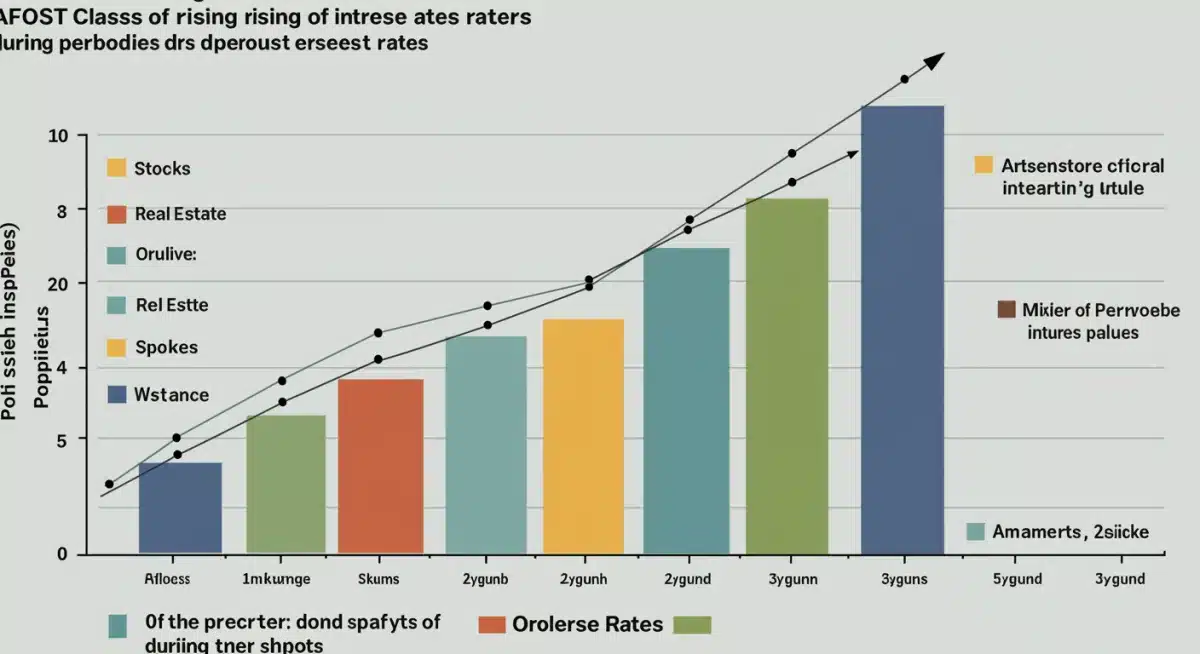
Rising interest rates do not affect all asset classes equally. Some may benefit, while others may face headwinds. Understanding these dynamics is crucial for making informed portfolio adjustments in anticipation of Fed Rate Hikes 2026.
Bonds and Fixed Income
Bonds are generally the most sensitive to interest rate changes. When interest rates rise, the value of existing bonds with lower fixed interest payments typically falls. This is because new bonds issued will offer higher yields, making older bonds less attractive. Investors holding long-duration bonds (bonds with a longer time to maturity) are particularly vulnerable to interest rate risk.
Strategy: Consider reducing exposure to long-duration bonds. Shorter-duration bonds or floating-rate bonds, whose interest payments adjust with market rates, may offer better protection. Diversifying into inflation-protected securities (TIPS) could also be a prudent move, as their principal value adjusts with inflation.
Equities (Stocks)
The impact on stocks is more nuanced. Higher interest rates can increase borrowing costs for companies, potentially reducing their profitability and future growth prospects. Growth stocks, which rely heavily on future earnings potential, can be particularly sensitive as their valuations are often based on discounted future cash flows, and higher discount rates reduce their present value.
However, some sectors may perform better. Financial institutions, such as banks, often benefit from rising rates because they can charge more for loans, increasing their net interest margins. Value stocks, which are typically more mature companies with stable earnings and less reliance on future growth, may also fare relatively better.
Strategy: Re-evaluate your equity holdings. Consider shifting from highly leveraged growth companies to those with strong balance sheets, stable cash flows, and pricing power. Sectors like financials, consumer staples, and healthcare might offer more resilience. Dividend-paying stocks from stable companies can also provide a buffer against market volatility.
Real Estate
Rising interest rates generally lead to higher mortgage rates, which can cool down the housing market by making homeownership less affordable. This can impact real estate investment trusts (REITs) and direct real estate investments. Commercial real estate might also see reduced demand as borrowing costs for development and acquisition increase.
Strategy: Be cautious with highly leveraged real estate investments. Focus on properties or REITs with strong rental income streams and favorable long-term leases that can absorb potential increases in financing costs. Consider REITs in sectors less sensitive to interest rate fluctuations, such as data centers or cell towers.
Commodities
Commodities, such as gold, oil, and agricultural products, can have a mixed reaction to rising rates. Gold is often seen as a safe-haven asset during times of economic uncertainty and inflation, but higher interest rates can make non-yielding assets like gold less attractive compared to interest-bearing alternatives. Oil and other industrial commodities are more tied to global economic growth; if rate hikes slow the economy, demand could soften.
Strategy: Commodities can serve as an inflation hedge, but their performance is not guaranteed in a rising rate environment. Diversify across various commodities and consider their specific supply-demand dynamics. Gold, while sensitive to real interest rates, can still offer portfolio diversification benefits.
Cash and Cash Equivalents
In a rising interest rate environment, cash and cash equivalents become more attractive as savings accounts, money market funds, and short-term Treasury bills offer higher yields. While they may not provide significant capital appreciation, they offer liquidity and a safe haven during market volatility.
Strategy: Increasing your allocation to cash or short-term, high-yield instruments can provide a flexible position to capitalize on future investment opportunities once interest rates stabilize or decline, or to simply earn a better return on your liquid assets.
Strategic Portfolio Adjustments for 2026 Fed Rate Hikes
Proactive portfolio management is key to navigating the anticipated Fed Rate Hikes 2026. Here are several strategies investors can consider:
1. Re-evaluate Your Bond Portfolio
Given the direct impact of rising rates on bonds, this should be a primary area of focus. If your portfolio has a significant allocation to long-duration fixed-rate bonds, consider shortening the duration. This can be achieved by selling longer-term bonds and reinvesting in shorter-term government or corporate bonds. Alternatively, consider bond funds that focus on shorter durations or utilize strategies like laddering, where bonds mature at staggered intervals.
2. Focus on Quality and Value in Equities
In a rising rate environment, companies with strong fundamentals, healthy balance sheets, consistent earnings, and robust free cash flow tend to outperform. These companies are less reliant on external financing and can better absorb increased borrowing costs. Furthermore, value stocks, which are often mature companies trading at lower multiples relative to their intrinsic value, may become more appealing as growth stock valuations come under pressure due to higher discount rates.
3. Explore Dividend Growth Stocks
Companies with a history of consistently increasing their dividends can provide a steady income stream that helps offset potential capital depreciation in a volatile market. These are typically financially sound companies with sustainable business models. A rising dividend can also signal management’s confidence in future earnings, which is reassuring during uncertain times.
4. Consider Alternative Investments
Alternative investments, which include private equity, hedge funds, managed futures, and certain real assets (like infrastructure or timberland), often have a lower correlation with traditional stocks and bonds. This can provide valuable diversification and potential for returns in environments where traditional assets struggle. However, these investments often come with higher fees, lower liquidity, and require a deeper understanding.
5. Review Your Exposure to Leveraged Assets
Assets or investments that rely heavily on borrowed money can become riskier as interest rates climb. This includes certain real estate investments, highly leveraged companies, and some private equity structures. Understand your overall leverage exposure and consider de-risking where appropriate.
6. Emphasize International Diversification
While the Federal Reserve’s actions impact global markets, other central banks may be on different monetary policy paths. Diversifying into international markets, particularly those with strong economic fundamentals and potentially lower interest rate sensitivity, can help spread risk and capture opportunities outside the U.S. market. However, currency risk must also be considered.
7. Maintain Adequate Cash Reserves
Having a healthy cash position provides flexibility. It allows you to cover unexpected expenses without liquidating investments at unfavorable times and positions you to take advantage of market downturns or new opportunities that arise from the volatility caused by Fed Rate Hikes 2026. As mentioned, higher rates also mean better returns on cash.

Long-Term Perspective and Risk Management
While preparing for Fed Rate Hikes 2026 is important, it’s equally crucial to maintain a long-term perspective and adhere to sound risk management principles. Market timing is notoriously difficult, and overreacting to short-term economic forecasts can lead to suboptimal decisions.
Diversification is Your Ally
A well-diversified portfolio across different asset classes, geographies, and investment styles remains the cornerstone of successful long-term investing. Diversification helps mitigate the impact of any single asset class or sector underperforming due to rising rates or other economic shifts.
Regular Portfolio Review
The economic environment is dynamic. What works today might not work tomorrow. Regularly review your portfolio’s asset allocation, rebalance as necessary, and ensure it aligns with your financial goals, risk tolerance, and the prevailing economic conditions. This includes staying updated on the Fed’s communications and economic data releases.
Understand Your Risk Tolerance
Before making any significant portfolio adjustments, honestly assess your risk tolerance. Rising interest rates can introduce volatility, and it’s important that your investment strategy allows you to sleep soundly at night. If necessary, consult with a financial advisor to ensure your portfolio is appropriately structured for your individual circumstances.
Inflation Hedge Beyond Commodities
While commodities can be an inflation hedge, consider other options. Real estate (carefully selected), certain infrastructure investments, and even some types of private equity can offer protection against inflation. Companies with strong pricing power – those that can pass on increased costs to consumers without significantly impacting demand – also serve as a natural inflation hedge within equity portfolios.
Consider a barbell strategy for bonds
Instead of just short-duration bonds, some investors might consider a barbell strategy – holding both very short-term and very long-term bonds, while avoiding intermediate-term bonds. The short-term bonds provide liquidity and benefit from rising rates, while the long-term bonds can offer greater returns if rates eventually stabilize or fall, and can also act as a hedge against deflationary shocks, which, while less likely during rate hikes, are still a tail risk. However, this strategy requires careful execution and understanding of bond market dynamics.
Focus on Companies with Strong Free Cash Flow
Companies that generate substantial free cash flow are better positioned to weather periods of higher interest rates. Strong free cash flow allows companies to fund their operations, invest in growth, reduce debt, and return capital to shareholders (via dividends or buybacks) without relying heavily on external borrowing. This financial independence becomes a significant advantage when borrowing costs are on the rise.
Embrace Flexibility
The future is inherently uncertain. While we can anticipate Fed Rate Hikes 2026 based on current economic trends, the exact timing, magnitude, and impact can vary. Maintaining a degree of flexibility in your investment approach allows you to adapt to new information and unexpected developments. This might involve setting aside a portion of your portfolio for tactical opportunities or having a well-defined rebalancing strategy.
Conclusion: Proactive Preparedness for 2026
The prospect of Fed Rate Hikes 2026 is a significant consideration for every investor. While the exact trajectory of interest rates remains subject to economic conditions, the prudent investor will already be planning and adapting their portfolio. By understanding the Fed’s motivations, the differential impact on various asset classes, and implementing strategic adjustments, you can position your portfolio to not only withstand potential headwinds but also identify opportunities for growth.
Remember, successful investing is not about avoiding all risks, but about understanding and managing them effectively. Stay informed, diversify wisely, and align your investment decisions with your long-term financial objectives. Proactive preparedness today will pave the way for a more resilient and potentially more prosperous portfolio in the face of future Federal Reserve policy shifts. Consulting with a qualified financial advisor can provide personalized insights and help tailor these strategies to your specific financial situation and goals.