Federal Cybersecurity Mandates 2026: Impact on US Businesses
Anúncios
Breaking: New Federal Cybersecurity Mandates Expected to Impact 70% of US Businesses by Q3 2026
The digital landscape for American businesses is on the cusp of a significant transformation. New federal cybersecurity mandates are not just a distant threat but a looming reality, projected to affect a staggering 70% of US businesses by the third quarter of 2026. This isn’t merely an update; it’s a foundational shift in how organizations must approach digital security, data protection, and operational resilience. The implications are far-reaching, demanding immediate attention and strategic planning from leadership across all sectors. Understanding these mandates, their scope, and the necessary preparations is no longer optional; it’s imperative for survival and sustained growth in an increasingly regulated digital economy.
Anúncios
The Impending Wave of Federal Cybersecurity Mandates: What You Need to Know
The announcement of new federal cybersecurity mandates marks a pivotal moment for US businesses. These mandates are not uniform; they are expected to be a multifaceted set of regulations designed to bolster national cybersecurity infrastructure, protect critical data, and standardize security practices across various industries. While the full details are still emerging, early indicators suggest a focus on several key areas: enhanced data encryption, stricter access controls, mandatory incident reporting, robust vendor risk management, and continuous vulnerability assessments. The goal is clear: to create a more resilient digital ecosystem capable of withstanding sophisticated cyber threats that continue to evolve at an alarming pace.
For many businesses, especially small and medium-sized enterprises (SMEs) that may have historically operated with less stringent security protocols, these new federal cybersecurity mandates will present significant challenges. The cost of compliance, the need for specialized cybersecurity talent, and the complexity of implementing new technologies can be daunting. However, it’s crucial to view these mandates not as burdensome regulations but as essential investments in long-term business continuity and trust. Non-compliance could lead to severe penalties, reputational damage, and a loss of customer confidence, far outweighing the initial investment in security upgrades.
Anúncios
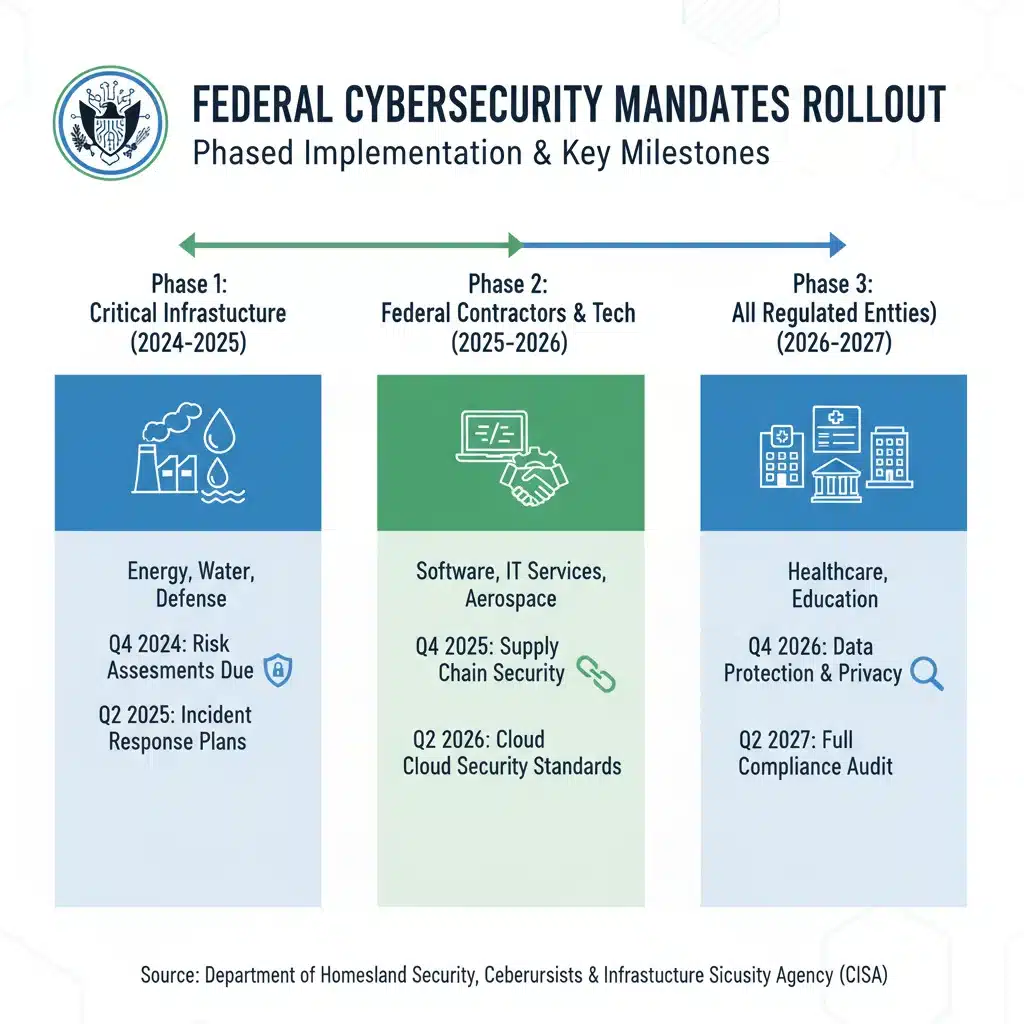
The timeline for these mandates is aggressive, with Q3 2026 serving as a critical benchmark. This means businesses have a limited window to assess their current security posture, identify gaps, and implement the necessary changes. Proactive engagement with cybersecurity experts, legal counsel specializing in regulatory compliance, and industry-specific guidance will be essential. This article will delve deeper into the expected components of these mandates, explore their sector-specific impacts, and provide actionable strategies for businesses to navigate this complex regulatory landscape successfully.
Why Now? The Rationale Behind Stricter Federal Cybersecurity Mandates
The decision to introduce sweeping federal cybersecurity mandates is not arbitrary; it’s a direct response to a confluence of factors that have elevated cybersecurity to a national security priority. The past few years have witnessed an unprecedented surge in cyberattacks, ranging from ransomware assaults on critical infrastructure to sophisticated state-sponsored espionage and widespread data breaches affecting millions of individuals. These incidents have highlighted significant vulnerabilities in both public and private sector defenses, exposing economic fragility and national security risks.
One primary driver is the increasing sophistication of threat actors. Cybercriminals are no longer just opportunistic hackers; they are well-funded, highly organized groups employing advanced techniques that often outpace existing security measures. Nation-state actors also pose a significant threat, targeting intellectual property, sensitive government data, and critical utilities. The interconnectedness of modern supply chains means that a breach in one organization can have a cascading effect, disrupting entire industries and potentially impacting national services.
Furthermore, the existing patchwork of state-level and industry-specific regulations has proven insufficient to establish a consistent baseline of security across the nation. The new federal cybersecurity mandates aim to standardize these efforts, ensuring a more uniform and robust defense against common threats. This unified approach is expected to streamline enforcement, provide clearer guidelines for businesses, and ultimately foster a more secure digital environment for all Americans. The urgency is palpable, and the government’s intention is to close critical security gaps before they can be exploited further.
Key Components Expected in the New Federal Cybersecurity Mandates
While the final text of the federal cybersecurity mandates is still under development, industry experts and leaked drafts suggest several core components will form the bedrock of these new regulations. Businesses should begin preparing for these areas:
- Enhanced Data Encryption Standards: Expect requirements for stronger encryption protocols for data at rest and in transit, particularly for sensitive personal information, financial data, and intellectual property.
- Mandatory Incident Reporting: Organizations will likely face strict deadlines for reporting cybersecurity incidents to relevant federal agencies. This includes not just breaches but also significant attempted attacks, aiming to improve threat intelligence sharing and rapid response capabilities.
- Robust Access Control and Identity Management: Multi-factor authentication (MFA) is expected to become a baseline requirement for accessing critical systems and data. Stricter controls over privileged access and regular access reviews will also be emphasized.
- Third-Party Risk Management: Businesses will be held more accountable for the cybersecurity posture of their vendors and supply chain partners. This will necessitate thorough due diligence, contractual agreements for security standards, and continuous monitoring of third-party risks.
- Regular Vulnerability Assessments and Penetration Testing: Periodic security audits, vulnerability scanning, and penetration testing will likely be mandated to proactively identify and address weaknesses in systems and applications.
- Cybersecurity Training and Awareness: Ongoing security awareness training for all employees, from frontline staff to executives, will be a critical component to mitigate human error, which remains a leading cause of breaches.
- Business Continuity and Disaster Recovery Planning: Organizations will need to demonstrate comprehensive plans for maintaining critical operations during and after a cyber incident, including data backup and recovery strategies.
These components collectively aim to create a multi-layered defense strategy, making it significantly harder for adversaries to penetrate and disrupt business operations. Compliance will require a holistic approach, integrating security into every aspect of an organization’s digital footprint.
Sector-Specific Impacts: Who Will Be Most Affected by Federal Cybersecurity Mandates?
While the new federal cybersecurity mandates are designed to have a broad impact, certain sectors are likely to feel the effects more acutely due to the nature of their data, critical infrastructure status, or existing regulatory landscape. The projected 70% impact rate by Q3 2026 suggests a wide net, but some industries will be at the forefront of this transformation.
Financial Services
Already heavily regulated, the financial sector will see even stricter requirements, especially concerning data encryption, fraud prevention, and real-time incident reporting. The mandates will likely build upon existing frameworks like GLBA, adding layers of federal oversight to ensure the stability of the financial system against cyber threats.
Healthcare
Protected Health Information (PHI) is a prime target for cybercriminals. While HIPAA provides a baseline, new federal cybersecurity mandates will likely demand more rigorous technical safeguards, greater accountability for third-party vendors handling PHI, and more stringent breach notification protocols, potentially expanding beyond current HIPAA requirements.
Critical Infrastructure (Energy, Water, Transportation)
These sectors are vital for national security and public welfare. The mandates will undoubtedly focus on operational technology (OT) security, resilience against nation-state attacks, and robust incident response plans to prevent catastrophic disruptions. The CISA’s role in coordinating these efforts will likely be amplified.
Defense Industrial Base (DIB)
Companies working with the Department of Defense (DoD) already adhere to strict standards like CMMC. The new federal mandates will likely reinforce and potentially expand these requirements, ensuring the protection of classified and controlled unclassified information (CUI) throughout the supply chain.
Small and Medium-Sized Businesses (SMBs)
Often overlooked in cybersecurity planning, SMBs represent a significant vulnerability due to limited resources and expertise. The 70% impact figure strongly suggests that these mandates will explicitly include provisions for SMBs, perhaps with tiered requirements or government support programs to aid compliance. This will be a major shift for many smaller entities.
Understanding which specific mandates apply to your industry will be crucial. Businesses should actively monitor official announcements and engage with industry associations to gain clarity on sector-specific requirements.
Preparing for Q3 2026: A Strategic Roadmap for Compliance
With Q3 2026 rapidly approaching, businesses cannot afford to wait. Proactive preparation is key to navigating the new federal cybersecurity mandates without disruption. Here’s a strategic roadmap:
1. Conduct a Comprehensive Cybersecurity Assessment
The first step is to understand your current security posture. Engage third-party cybersecurity experts to perform a thorough assessment of your existing systems, networks, data, and processes. Identify vulnerabilities, compliance gaps with anticipated mandates, and areas requiring immediate attention. This assessment should cover both IT and, where applicable, OT environments.

2. Develop a Detailed Compliance Plan
Based on your assessment, create a comprehensive plan outlining the steps needed to achieve compliance. This plan should include specific projects, timelines, assigned responsibilities, and budget allocations. Prioritize high-risk areas and those with the most stringent mandate requirements. Consider breaking down the compliance journey into manageable phases.
3. Invest in Technology and Tools
Modern cybersecurity demands modern tools. This may include upgrading to advanced endpoint detection and response (EDR) solutions, implementing Security Information and Event Management (SIEM) systems, deploying robust data loss prevention (DLP) tools, and enhancing network segmentation. Strong encryption solutions and secure cloud configurations will also be vital.
4. Strengthen Your Incident Response Capabilities
The mandates will emphasize rapid incident reporting and effective response. Review and update your incident response plan, conduct tabletop exercises to simulate cyberattacks, and ensure your team is trained to execute the plan efficiently. Establish clear communication protocols for internal stakeholders and external reporting requirements.
5. Prioritize Employee Training and Awareness
Your employees are often the first line of defense. Implement mandatory, regular cybersecurity awareness training that covers phishing recognition, strong password practices, safe browsing habits, and data handling protocols. Foster a culture where security is everyone’s responsibility.
6. Enhance Third-Party Risk Management
Scrutinize your vendor ecosystem. Develop a robust program for assessing, onboarding, and continuously monitoring third-party vendors for cybersecurity risks. Ensure contractual agreements include clauses mandating compliance with security standards and incident reporting requirements.
7. Seek Expert Legal and Consulting Guidance
Navigating complex federal cybersecurity mandates requires specialized expertise. Engage legal counsel familiar with cybersecurity law and regulatory compliance. Partner with cybersecurity consulting firms that can provide strategic guidance, implementation support, and ongoing managed security services.
The Long-Term Benefits of Embracing Federal Cybersecurity Mandates
While the immediate focus for businesses will be on achieving compliance with the new federal cybersecurity mandates, it’s crucial to recognize the significant long-term benefits that extend beyond simply avoiding penalties. Embracing these mandates can transform an organization’s security posture, enhance its market position, and foster greater trust with customers and partners.
Improved Risk Management and Resilience
By implementing the required controls and processes, businesses will inherently become more resilient to cyber threats. A proactive approach to security reduces the likelihood of successful attacks, minimizes downtime, and ensures business continuity, even in the face of sophisticated adversaries. This improved risk management translates directly into greater operational stability.
Enhanced Customer Trust and Brand Reputation
In an era where data breaches are commonplace, consumers and clients are increasingly prioritizing security when choosing who to do business with. Organizations that demonstrably comply with stringent federal security standards will gain a significant competitive advantage, building stronger trust and enhancing their brand reputation as reliable and secure partners.
Streamlined Operations and Efficiency
While initial implementation may seem complex, standardizing security practices and automating certain processes can lead to more efficient IT operations. Clearer protocols, better data governance, and improved access controls can reduce manual errors and optimize resource allocation.
Competitive Advantage and Market Opportunities
Businesses that are early adopters and achieve full compliance can differentiate themselves in the marketplace. For some, this might even open doors to new contracts, particularly with government entities or larger corporations that prioritize secure supply chains.
Reduced Legal and Financial Liabilities
Compliance significantly reduces the risk of costly data breaches, regulatory fines, and potential lawsuits. The financial burden of a major cyber incident can be catastrophic, and investing in compliance is a powerful form of insurance against these liabilities.
Ultimately, the new federal cybersecurity mandates are not just about regulation; they are about fostering a more secure, trustworthy, and resilient digital economy. Businesses that strategically embrace these changes will not only meet their obligations but also position themselves for sustained success in the years to come.
The Role of Government Support and Resources for Compliance
Recognizing the potential burden on businesses, particularly small and medium-sized enterprises, it is anticipated that the federal government will provide resources and support to aid in compliance with the new federal cybersecurity mandates. These initiatives could include:
- Guidance and Frameworks: Agencies like the National Institute of Standards and Technology (NIST) are likely to release updated frameworks and detailed guidance documents to help organizations understand and implement the mandates.
- Training Programs: Opportunities for cybersecurity training, potentially subsidized or free, could be offered to help businesses upskill their workforce.
- Financial Assistance: For eligible small businesses, grants or low-interest loans might become available to help offset the costs of cybersecurity upgrades.
- Information Sharing Platforms: Enhanced platforms for threat intelligence sharing and best practices will be crucial for fostering a collaborative defense environment.
- Compliance Checklists and Tools: Simplified tools and checklists could be developed to help businesses self-assess their compliance readiness.
Businesses should actively seek out and leverage these resources as they become available. Staying informed through official government channels and industry associations will be key to accessing the support designed to ease the transition into the new regulatory environment. Collaboration between the private sector and government will be vital for the successful implementation of these critical federal cybersecurity mandates.