
Navigating 2026 Federal Student Aid: A Step-by-Step Guide for New Applicants in the USA (Practical Solutions)
Embarking on a higher education journey is an exciting prospect, but the financial aspect can often feel daunting. For many aspiring students in the USA, Federal Student Aid is a crucial lifeline, offering grants, scholarships, work-study programs, and loans to make college dreams a reality. As we look towards the 2026 academic year, understanding the intricacies of the application process is more important than ever. This comprehensive guide is designed specifically for new applicants, providing a step-by-step roadmap to successfully navigate the world of Federal Student Aid 2026, complete with practical solutions and essential tips.
The landscape of federal financial aid is constantly evolving, with updates and changes designed to streamline the process and expand accessibility. Staying informed and prepared is key to maximizing your aid potential. Whether you’re a high school senior planning your future, a returning adult student, or a parent supporting your child’s education, this article will equip you with the knowledge to confidently approach your Federal Student Aid 2026 application.
Anúncios
Understanding the Foundation: What is Federal Student Aid?
Before diving into the application specifics, it’s vital to grasp what Federal Student Aid encompasses. Administered by the U.S. Department of Education, these programs provide financial assistance to eligible students attending approved postsecondary institutions. The primary goal is to ensure that all qualified individuals have the opportunity to pursue higher education, regardless of their socioeconomic background.
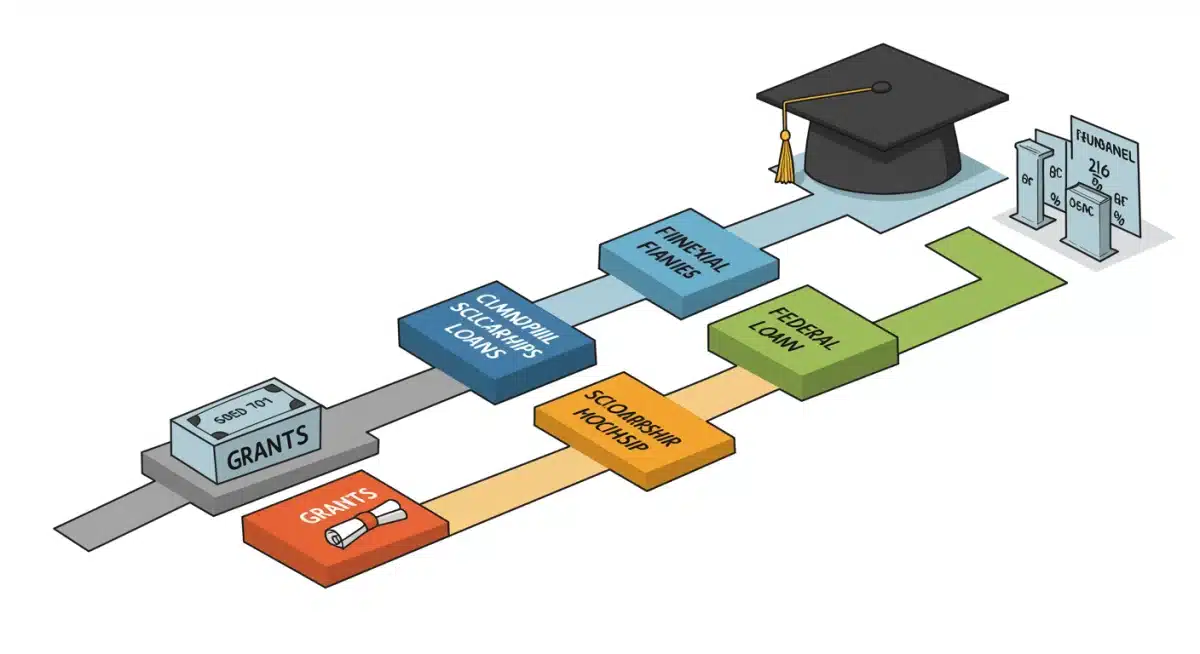
Federal Student Aid 2026 typically comes in four main forms:
Anúncios
- Grants: Often referred to as "gift aid," grants do not need to be repaid. They are usually awarded based on financial need. The most common federal grant is the Pell Grant.
- Scholarships: While many scholarships are offered by private organizations, colleges, or states, some federal programs might also include scholarship components. Like grants, scholarships do not need to be repaid.
- Work-Study Programs: These programs allow students to earn money to help pay for educational expenses through part-time jobs, usually on campus or at a non-profit organization. The wages earned are used to cover educational costs.
- Federal Student Loans: Unlike grants and scholarships, loans must be repaid with interest. Federal loans often have more favorable terms than private loans, including fixed interest rates, income-driven repayment plans, and potential for deferment or forbearance.
The cornerstone of applying for any of these aid types is the Free Application for Federal Student Aid (FAFSA). Understanding the FAFSA and its importance is the first critical step in securing your Federal Student Aid 2026.
The Cornerstone: The FAFSA for 2026
The FAFSA is the single most important application for federal student aid. It collects detailed financial information about you (and your parents, if you are a dependent student) to determine your Expected Family Contribution (EFC) or, under the new FAFSA Simplification Act, your Student Aid Index (SAI). Both EFC and SAI are metrics used by schools to calculate how much financial aid you are eligible to receive.
For the 2026-2027 academic year, the FAFSA will typically open on October 1, 2025. While this date is subject to change, it’s crucial to mark it on your calendar. Submitting your FAFSA as early as possible is a practical solution that cannot be overstated, as some aid is awarded on a first-come, first-served basis, and many state and institutional deadlines are very early.
Key Changes for Future FAFSA Cycles (Post-Simplification Act)
The FAFSA Simplification Act has brought significant changes to the application process, aiming to make it simpler and more equitable. While many of these changes were implemented for the 2024-2025 FAFSA cycle, their impact will continue to shape the Federal Student Aid 2026 process. Key changes include:
- Simplified FAFSA Form: The number of questions has been significantly reduced.
- Shift from EFC to SAI: The Expected Family Contribution (EFC) has been replaced by the Student Aid Index (SAI). This new formula offers a more holistic view of a student’s financial need.
- Direct Data Exchange with IRS: A mandatory direct data exchange with the IRS will automatically transfer tax information, simplifying the process and reducing errors for most applicants. This feature is a game-changer for efficiency.
- Expanded Pell Grant Eligibility: More students are expected to be eligible for Pell Grants, and the maximum award amount is tied to inflation.
- Changes to Family Size Definition: The definition of family size will now be based on tax information.
- No Longer Penalizing Students with Small Business/Farm Assets: Assets from small businesses or family farms will no longer be counted in the aid calculation.
These updates for Federal Student Aid 2026 are designed to streamline the application and provide more accurate assessments of financial need. Familiarizing yourself with these changes will ensure a smoother application experience.
Step-by-Step Application Process for 2026 Federal Student Aid
Step 1: Get Your FSA ID
Before you can even begin the FAFSA, both the student and at least one parent (if you are a dependent student) will need to create an FSA ID. This is a username and password combination that serves as your legal signature and allows you to access your federal student aid information online. It’s crucial to create this well in advance, as it can take a few days to verify your information.
- Practical Solution: Create your FSA ID as soon as possible, ideally months before the FAFSA even opens. Keep your username and password in a secure, memorable location.
Step 2: Gather Necessary Documents
Even with the simplified FAFSA, you’ll still need some key documents to complete the application accurately. Having everything organized beforehand will save you time and stress.
- Your Social Security number (and parents’ Social Security numbers if dependent).
- Your driver’s license number (if you have one).
- Your Alien Registration Number (if you are not a U.S. citizen).
- Federal income tax returns (for the "prior-prior" year). For the 2026-2027 FAFSA, you will use your 2024 tax information.
- Records of untaxed income (e.g., child support received, interest income, veterans noneducation benefits).
- Information on cash, savings, and checking account balances.
- Information on investments (e.g., real estate, non-retirement stocks, bonds, mutual funds) and business/farm assets (though small business/farm assets may be excluded under the new rules).
- Practical Solution: Create a dedicated folder (physical or digital) for all your financial aid documents. Use a checklist to ensure you have everything before starting the FAFSA.
Step 3: Complete the FAFSA Online
Once the FAFSA opens (October 1, 2025, for the 2026-2027 academic year), log in with your FSA ID and begin the application. The online form will guide you through each section.
- Personal Information: Fill in your demographic details.
- School Selection: List all the colleges you are considering. You can list up to 20 schools at a time. It’s important to list all potential schools, as they won’t consider you for aid until they receive your FAFSA information.
- Dependency Status: Answer a series of questions to determine if you are a dependent or independent student. This dictates whether you need to provide parental information.
- Parental Information (if dependent): Your parents will need to provide their financial details. Under the FAFSA Simplification Act, the direct data exchange with the IRS will automatically pull most of this information.
- Financial Information: Provide details about your income, assets, and untaxed income. Again, the IRS data exchange will be highly beneficial here.
- Sign and Submit: Review all your answers carefully, then sign the FAFSA using your FSA ID and submit it.
- Practical Solution: Don’t wait until the last minute. Start the FAFSA early in October. If you encounter questions you don’t understand, use the "Help" feature on the FAFSA website or consult your school’s financial aid office. Double-check every entry before submitting to avoid delays.

Step 4: Review Your Student Aid Report (SAR)
After you submit your FAFSA, you will receive a Student Aid Report (SAR) within a few days to a few weeks. The SAR summarizes the information you provided on your FAFSA and indicates your Student Aid Index (SAI). Review this document carefully for any errors.
- Practical Solution: If you find any errors on your SAR, log back into your FAFSA account and make corrections immediately. Mistakes can significantly impact your aid eligibility.
Step 5: Respond to Requests from Financial Aid Offices
Colleges you listed on your FAFSA will receive your information. They may then request additional documents to verify the information you provided (this is called "verification"). This is a normal part of the process, but responding promptly is essential.
- Practical Solution: Check your email and postal mail regularly for communications from college financial aid offices. Respond to all requests for information or documents as quickly as possible to avoid delays in receiving your aid package.
Step 6: Receive and Compare Financial Aid Offers
Once you’ve been accepted to a college and the financial aid office has processed your FAFSA and any additional documents, you will receive a financial aid offer (sometimes called an award letter). This letter outlines the types and amounts of aid the school is offering you.
- Practical Solution: Don’t just look at the total aid amount. Compare the different components of each offer (grants, scholarships, work-study, loans). Prioritize "gift aid" (grants and scholarships) as it doesn’t need to be repaid. Understand the terms of any loans offered. Create a spreadsheet to compare offers side-by-side if you’ve been accepted to multiple schools.
Step 7: Accept Your Aid and Reapply Annually
Once you’ve decided which aid to accept, follow the instructions provided by the college to formally accept it. Remember, Federal Student Aid 2026 is not a one-time process. You must reapply for federal student aid every year you plan to attend college by submitting a new FAFSA.
- Practical Solution: Be mindful of acceptance deadlines for aid offers. Set a reminder to complete your FAFSA each year around October 1st to ensure continuous funding.
Eligibility Requirements for 2026 Federal Student Aid
To be eligible for Federal Student Aid 2026, you generally must meet several basic requirements:
- Be a U.S. citizen or eligible non-citizen.
- Have a valid Social Security number (with some exceptions).
- Be enrolled or accepted for enrollment as a regular student in an eligible degree or certificate program.
- Be enrolled at least half-time to be eligible for Direct Loans.
- Maintain satisfactory academic progress once in college.
- Sign the certification statement on the FAFSA stating that you will use federal student aid only for educational purposes.
- Not be in default on any federal student loan or owe a refund on a federal grant.
- Be registered with Selective Service (if you are a male between the ages of 18 and 25).
Specific aid programs may have additional requirements, but meeting these general criteria is the first step.
Maximizing Your Federal Student Aid 2026 Potential: Practical Solutions
1. Apply Early, Every Year
As mentioned, submitting your FAFSA as soon as it opens (October 1st) is paramount. This positions you favorably for aid programs with limited funding, such as some state grants and institutional scholarships. Make it a yearly tradition.
2. Understand Your Dependency Status
Your dependency status dictates whether you need to include parental financial information. If you are considered a dependent student, your parents’ income and assets will be factored into your SAI. If you believe you have unusual circumstances that should qualify you as independent, even if the FAFSA questions suggest otherwise, speak to your college’s financial aid office. They may be able to perform a "dependency override."
3. Be Accurate and Honest
Providing false information on your FAFSA can lead to severe penalties, including fines and imprisonment. Always be truthful and accurate. If you make a mistake, correct it immediately.
4. Don’t Assume You Won’t Qualify
Many students and families mistakenly believe their income is too high to qualify for aid. However, eligibility is based on many factors, and even higher-income families can qualify for certain types of aid, especially federal student loans. Completing the FAFSA is the only way to know for sure.
5. Research State and Institutional Aid
The FAFSA is primarily for federal aid, but it is also often required for state and institutional financial aid programs. Check with your state’s higher education agency and the financial aid offices of the colleges you are interested in for their specific deadlines and application procedures for non-federal aid.
6. Understand the Impact of Assets
While the new FAFSA Simplification Act has adjusted how certain assets are treated, understanding which assets count is still important. Generally, assets in retirement accounts (401k, IRA) are not counted, but non-retirement investments, savings, and checking accounts are. Strategic financial planning can sometimes optimize your aid eligibility, but always consult with a financial advisor for personalized advice.
7. Consider Special Circumstances
If your family’s financial situation has significantly changed since the tax year used on your FAFSA (e.g., job loss, divorce, death of a parent, high medical expenses), contact the financial aid office at your prospective colleges. They have the authority to make adjustments to your aid package based on "special circumstances" or "professional judgment." Be prepared to provide documentation.
8. Beware of Scams
Never pay anyone to complete your FAFSA. The application is free, and legitimate financial aid assistance is available through your school’s financial aid office or the U.S. Department of Education. Be wary of any service that guarantees scholarships or grants for a fee.
Common Misconceptions About Federal Student Aid 2026
Dispelling common myths can help you approach the application process with greater clarity:
- Myth: Only students with excellent grades get aid.
Reality: While some scholarships are merit-based, federal student aid is primarily needs-based. Your grades do not directly impact your eligibility for most federal grants and loans.
- Myth: My parents earn too much, so I won’t qualify.
Reality: There’s no income cut-off for federal student aid. Many factors are considered, and even higher-income families can qualify for federal loans or grants, especially under the expanded Pell Grant eligibility. Always apply!
- Myth: FAFSA is too complicated.
Reality: The FAFSA Simplification Act has made the form shorter and easier to complete. With the IRS Direct Data Exchange, much of the financial information will be automatically transferred, reducing complexity and potential errors.
- Myth: I only need to apply once.
Reality: You must complete a new FAFSA every year you want to receive federal student aid. Your financial situation can change, and so can aid eligibility.
- Myth: Federal student loans are bad debt.
Reality: Federal student loans often come with borrower protections not available with private loans, such as fixed interest rates, income-driven repayment plans, and options for deferment or forbearance. They can be a responsible way to fund your education if managed wisely.
Key Deadlines to Remember for 2026 Federal Student Aid
While the federal deadline for submitting the FAFSA is typically much later in the academic year, it’s crucial to prioritize earlier deadlines:
- October 1, 2025: Anticipated opening date for the 2026-2027 FAFSA. Submit as close to this date as possible.
- State Deadlines: Each state has its own deadline for state-funded financial aid. These can be very early (e.g., February or March of the prior year). Check your state’s higher education website.
- College Deadlines: Individual colleges often have their own priority deadlines for institutional aid. These can also be very early. Check each school’s financial aid website.
- Federal Deadline: This is generally much later (e.g., June 30, 2027, for the 2026-2027 FAFSA), but meeting only this deadline means you’ll likely miss out on state and institutional aid.
Practical Solution: Create a personalized calendar with all relevant deadlines for federal, state, and institutional aid. Missing a deadline can mean missing out on crucial funding.
After Receiving Your Aid: Managing Your Funds
Once you’ve successfully navigated the Federal Student Aid 2026 application process and received your aid package, responsible management of these funds is the next step:
- Budget Wisely: Create a budget to manage your grants, scholarships, and loan disbursements. Understand how much you need for tuition, fees, housing, books, and living expenses.
- Borrow Only What You Need: Federal student loans are a valuable resource, but they must be repaid. Only accept the amount you truly need to cover your educational costs.
- Understand Loan Repayment: Familiarize yourself with the different federal loan repayment plans. Income-driven repayment (IDR) plans can make repayment more manageable after graduation by adjusting payments based on your income.
- Maintain Satisfactory Academic Progress (SAP): To continue receiving federal student aid, you must meet your school’s SAP requirements, which typically involve maintaining a certain GPA and completing a minimum number of credits each term.
Conclusion: Your Path to Educational Funding with Federal Student Aid 2026
Applying for Federal Student Aid 2026 might seem complex at first glance, but by breaking it down into manageable steps and understanding the key changes and practical solutions, you can confidently secure the funding needed for your higher education. Remember to start early, gather your documents, be accurate, and ask for help when needed.
Your educational journey is an investment in your future, and federal student aid is designed to support that investment. By diligently following this guide, new applicants can successfully navigate the process and unlock the opportunities that higher education provides. Don’t let financial concerns deter your dreams – take the proactive steps necessary to secure your Federal Student Aid 2026.