Medicare Part D 2026: Navigating Upcoming Prescription Drug Changes

Understanding the Latest 2026 Medicare Part D Changes: What You Need to Know
As we look ahead, significant reforms are on the horizon for Medicare Part D, the federal program that provides prescription drug coverage to millions of Americans. The year 2026 marks a pivotal moment, with changes designed to make prescription medications more affordable and accessible. These updates are part of broader legislative efforts to rein in drug costs and reduce the financial burden on seniors and individuals with disabilities. For anyone currently enrolled in or considering Medicare Part D, grasping these upcoming adjustments is crucial for informed healthcare planning.
The landscape of prescription drug coverage is constantly evolving, and the changes slated for 2026 are among the most impactful in recent memory. These reforms stem from the Inflation Reduction Act (IRA) of 2022, a landmark piece of legislation that introduced a series of provisions aimed at lowering healthcare costs, particularly for prescription drugs. While some changes have already begun to roll out, 2026 will see the full implementation of key provisions that will fundamentally alter how beneficiaries pay for their medications.
At the heart of the 2026 reforms is the introduction of a new, groundbreaking out-of-pocket spending cap for Medicare Part D beneficiaries. This cap is projected to provide substantial financial relief, especially for those with high prescription drug costs. Beyond the cap, other structural changes to the Part D benefit design, including adjustments to manufacturer discounts and plan liability, will also come into effect. Navigating these complexities requires a clear understanding of what’s changing, why it’s changing, and how it will directly impact your wallet and your access to essential medications.
This comprehensive guide will delve into the specifics of the 2026 Medicare Part D changes, offering a detailed breakdown of each major reform. We’ll explore the implications for various phases of Part D coverage, discuss the financial benefits for beneficiaries, and provide practical advice on how to prepare for these upcoming shifts. Our goal is to empower you with the knowledge needed to confidently manage your prescription drug coverage under the new rules, ensuring you can continue to access the medications you need without undue financial strain.
The Cornerstone of Reform: The Out-of-Pocket Spending Cap
Perhaps the most significant and eagerly anticipated change coming in 2026 is the implementation of an annual out-of-pocket spending cap for Medicare Part D beneficiaries. This provision is a game-changer for individuals who face exorbitant prescription drug costs, offering a much-needed safeguard against catastrophic expenses.
What is the Out-of-Pocket Cap?
Starting in 2026, the total amount a Medicare Part D beneficiary will pay out of pocket for covered prescription drugs in a given year will be capped at $2,000. This $2,000 limit includes deductibles, co-payments, and co-insurance amounts paid by the beneficiary. Once you hit this cap, you will not have to pay any additional out-of-pocket costs for covered Part D drugs for the remainder of the calendar year.
This is a monumental shift from the current Part D structure, which, while offering catastrophic coverage, does not have a hard cap on beneficiary spending. Under the current system, once beneficiaries reach the catastrophic phase, they are still responsible for 5% of their drug costs, with no upper limit. For individuals taking expensive specialty drugs or multiple medications, this 5% could still translate into thousands of dollars annually. The 2026 cap eliminates this open-ended liability, providing unprecedented financial predictability and protection.
Who Benefits Most from the Cap?
The $2,000 out-of-pocket cap will primarily benefit individuals with high prescription drug costs. This includes:
- Seniors with chronic conditions: Those managing conditions like cancer, rheumatoid arthritis, multiple sclerosis, or certain autoimmune diseases often rely on high-cost specialty medications.
- Low-income beneficiaries: While Extra Help (Low-Income Subsidy) already assists many, the cap provides an additional layer of protection.
- Anyone facing unexpected high drug costs: Even healthy individuals can suddenly face significant prescription expenses due to an unforeseen illness or injury.
By preventing catastrophic out-of-pocket spending, the cap aims to improve medication adherence, reduce medical debt, and enhance the overall financial well-being of Medicare Part D beneficiaries. It ensures that no matter how expensive a patient’s prescription drugs are, their annual out-of-pocket liability for those drugs will not exceed $2,000.
Restructuring the Part D Benefit: Beyond the Cap
The 2026 reforms to Medicare Part D extend beyond just the out-of-pocket cap. The entire benefit structure is being redesigned to support this cap and redistribute costs more equitably among beneficiaries, plans, and manufacturers. Understanding these underlying structural changes is key to fully appreciating the impact of 2026 Medicare Part D.
Elimination of the 5% Coinsurance in Catastrophic Phase
As mentioned, a critical component of the 2026 changes is the elimination of the 5% coinsurance that beneficiaries currently pay in the catastrophic phase. Under the new structure, once a beneficiary reaches the $2,000 out-of-pocket cap, they will have $0 cost-sharing for the remainder of the year. This directly addresses the prior concern of unlimited liability in the catastrophic phase, making the cap truly effective.
Changes in Manufacturer Discounts and Plan Liability
To support the new benefit design and the out-of-pocket cap, there will be significant adjustments to how drug manufacturers and Part D plans contribute to drug costs. These changes are crucial for financing the reforms and ensuring the stability of the Part D program.
- Manufacturer Discounts: Drug manufacturers will be required to provide larger discounts on brand-name drugs across various phases of the Part D benefit. In the catastrophic phase, for instance, manufacturer discounts will increase significantly. This shifts a greater portion of the cost burden onto pharmaceutical companies.
- Plan Liability: Part D plans will also see changes in their liability for drug costs. While they will continue to cover a substantial portion of costs, the specific percentages they are responsible for in each phase (deductible, initial coverage, coverage gap, catastrophic) will be adjusted to align with the new benefit design and the out-of-pocket cap.
- Government Reinsurance: The federal government’s role in reinsurance (covering a large percentage of costs in the catastrophic phase) will also be adjusted to accommodate the new structure, ensuring financial solvency for the plans while protecting beneficiaries.
These structural shifts are complex, but their collective aim is clear: to reduce the financial responsibility of beneficiaries, particularly those with high drug costs, by rebalancing the contributions from manufacturers, plans, and the government. This rebalancing is fundamental to making the $2,000 out-of-pocket cap feasible and sustainable.
The Phased Approach to Part D Reforms
It’s important to remember that the 2026 changes are part of a multi-year implementation of the Inflation Reduction Act’s drug pricing provisions. While 2026 brings the most significant beneficiary-facing changes, other reforms have already taken effect or will precede it. Understanding this phased approach helps put the 2026 updates into context.
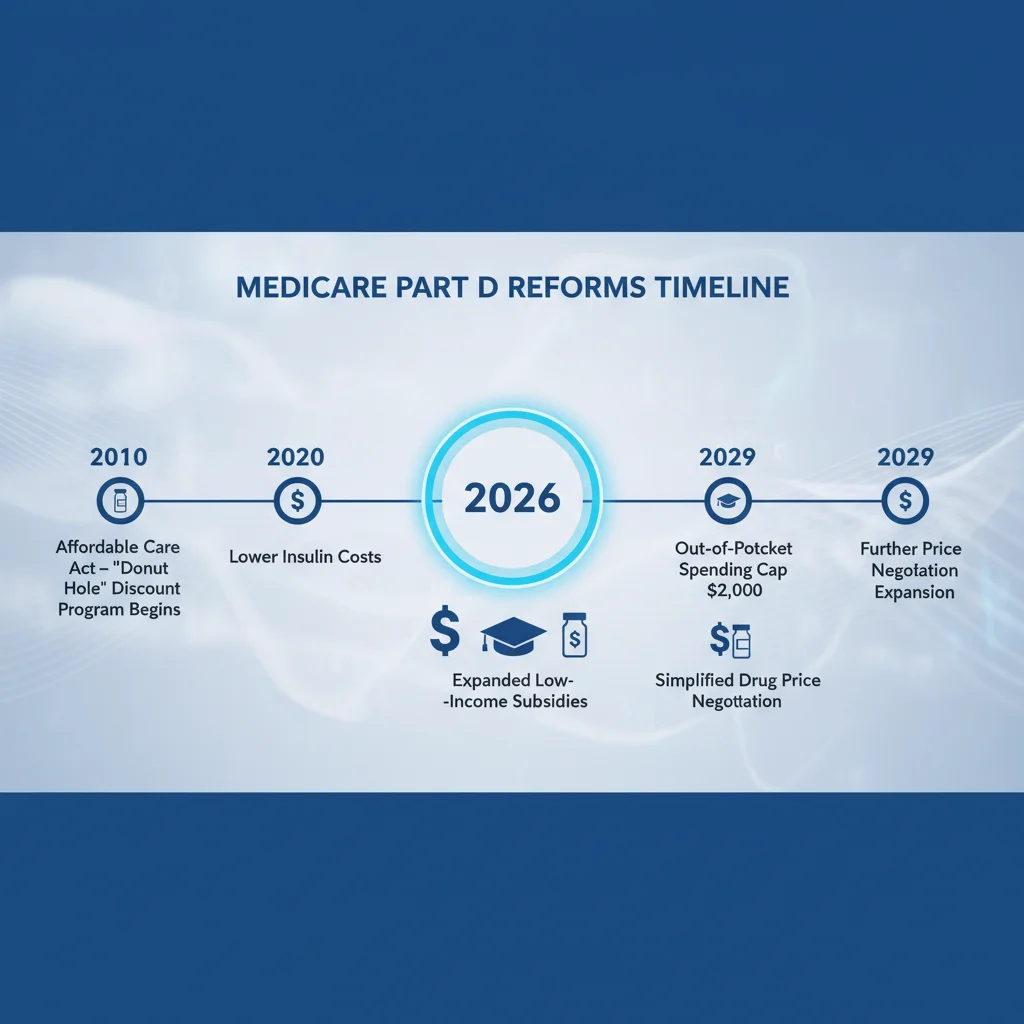
Previous and Concurrent Changes
- Insulin Cap (2023): The IRA capped out-of-pocket costs for a month’s supply of insulin at $35 for Medicare beneficiaries, a change that significantly benefited many individuals with diabetes.
- Vaccine Costs (2023): Most adult vaccines recommended by the Advisory Committee on Immunization Practices (ACIP) are now covered at no cost-sharing under Medicare Part D.
- Inflation Rebates (2023 onwards): Drug manufacturers are required to pay rebates to Medicare if they raise prices faster than inflation, helping to control future price increases.
- Prescription Drug Price Negotiation (2026 onwards): While not directly a Part D benefit design change, the ability for Medicare to negotiate prices for certain high-cost drugs will begin to impact drug costs and availability, with the negotiated prices taking effect in 2026 and beyond. This is a crucial, broader reform that complements the Part D structural changes.
The 2026 changes to Medicare Part D, specifically the out-of-pocket cap and the restructuring of the benefit, are the culmination of these legislative efforts to provide comprehensive relief from high prescription drug costs. They represent a significant step towards a more equitable and affordable prescription drug program for Medicare beneficiaries.
Navigating the New Landscape: What Beneficiaries Should Do
With these substantial changes on the horizon for 2026 Medicare Part D, beneficiaries will need to be proactive in understanding how these reforms will affect their individual situations. While the overall goal is to lower costs, personal circumstances, chosen plans, and specific medication needs will always play a role.
Review Your Current Plan and Medication Needs
Even though 2026 is still some time away, it’s never too early to start thinking about your prescription drug coverage. As the implementation date approaches, Part D plans will adjust their offerings to comply with the new regulations. It will be crucial to:
- Understand your current medication costs: Keep track of how much you currently spend out-of-pocket on prescription drugs annually. This will help you appreciate the potential savings from the $2,000 cap.
- Review your formulary: Ensure your current Part D plan still covers all your necessary medications. While the changes primarily affect cost-sharing, formularies can change year-to-year.
- Anticipate future needs: If you expect to start new medications or anticipate changes in your health, factor these into your planning.
Engage During Open Enrollment
The annual Medicare Open Enrollment Period (October 15 – December 7) will be more critical than ever as 2026 approaches. This is your opportunity to:
- Compare plans: Carefully compare available Part D plans to see how they have adapted to the new benefit design. While the $2,000 cap will be universal, deductibles, co-pays before reaching the cap, and specific formulary coverage can still vary significantly between plans.
- Assess your costs: Use Medicare’s Plan Finder tool to estimate your annual costs under different plans, taking into account the new 2026 Medicare Part D structure. This tool will be updated to reflect the new benefit design.
- Seek expert advice: Consult with a trusted Medicare advisor, State Health Insurance Assistance Program (SHIP) counselor, or other independent experts. They can help you understand the nuances of the reforms and how they apply to your specific situation.
The changes in 2026 are designed to simplify and make Part D more affordable, but choosing the right plan for your needs will remain a vital step in maximizing your benefits. The out-of-pocket cap offers a safety net, but minimizing your costs up to that cap through smart plan selection is still important.
Potential Impact and Long-Term Implications of Medicare Part D 2026
The 2026 Medicare Part D reforms are expected to have a far-reaching impact, not just on individual beneficiaries but on the entire healthcare ecosystem. These changes represent a significant step towards addressing the long-standing issue of high prescription drug costs in the United States.
Financial Relief for High-Cost Beneficiaries
The most immediate and tangible impact will be the substantial financial relief for beneficiaries with high prescription drug costs. Thousands, if not millions, of Americans who previously faced unlimited out-of-pocket expenses in the catastrophic phase will now have a predictable ceiling on their spending. This can prevent medical debt, improve financial security, and reduce the difficult choices many seniors have had to make between essential medications and other necessities.
Improved Medication Adherence
When prescription drug costs are a barrier, patients may skip doses, delay refills, or abandon their medications altogether. By capping out-of-pocket spending, the 2026 reforms are likely to improve medication adherence, leading to better health outcomes and reduced hospitalizations or complications from untreated conditions. This has broader public health benefits and can ultimately reduce overall healthcare spending by preventing more severe illnesses.
Shifts in Drug Development and Pricing Strategies
The increased manufacturer discounts and the broader drug price negotiation provisions of the IRA could influence how pharmaceutical companies develop and price new drugs. While the full effects will unfold over time, there’s an expectation that these changes could incentivize more responsible pricing and potentially shift research and development towards areas with greater unmet needs, rather than solely focusing on high-profit drugs with limited competition.
Increased Enrollment and Engagement
The promise of a $2,000 out-of-pocket cap and more predictable costs might encourage more eligible individuals to enroll in Medicare Part D plans. Furthermore, beneficiaries may become more engaged in understanding their options, knowing that the program offers stronger financial protections. This increased engagement can lead to more informed choices and better utilization of benefits.

Challenges and Considerations
While the 2026 Medicare Part D changes are largely positive, there may be some challenges and considerations:
- Initial Confusion: As with any major reform, there may be a period of adjustment and potential confusion among beneficiaries and even healthcare providers as the new rules are implemented. Clear communication and educational resources will be vital.
- Impact on Plan Premiums: While the overall goal is to reduce beneficiary costs, the redistribution of financial liability could potentially lead to some adjustments in Part D plan premiums. However, the benefits of the out-of-pocket cap are expected to far outweigh any premium increases for those with high drug costs.
- Drug Availability: Some concerns have been raised about whether drug price negotiation and increased manufacturer discounts could impact the availability of certain drugs. However, safeguards are in place, and the long-term goal is to ensure access to essential medications at fair prices.
Overall, the 2026 Medicare Part D reforms represent a significant step forward in making prescription drugs more affordable and healthcare more accessible for millions of Americans. By introducing an out-of-pocket cap and restructuring the benefit, the government is aiming to provide a stronger safety net for those who need it most.
Conclusion: Preparing for a More Affordable Future with Medicare Part D 2026
The year 2026 will usher in a new era for Medicare Part D, fundamentally reshaping how millions of beneficiaries access and pay for their prescription medications. The centerpiece of these reforms, the $2,000 annual out-of-pocket spending cap, is poised to deliver substantial financial relief and peace of mind to those facing high drug costs. Coupled with the elimination of the 5% coinsurance in the catastrophic phase and adjusted contributions from manufacturers and plans, these changes signify a profound commitment to making healthcare more affordable and equitable.
While the benefits are clear, preparation is key. As 2026 approaches, it will be essential for all Medicare Part D beneficiaries to:
- Stay Informed: Continue to seek out reliable information from official sources like Medicare.gov and trusted healthcare advisors.
- Track Your Spending: Understand your current prescription drug expenses to better appreciate the impact of the new cap.
- Utilize Open Enrollment: Actively compare Part D plans during the annual enrollment period, leveraging updated tools to find the coverage that best suits your needs under the new rules.
- Seek Guidance: Don’t hesitate to consult with Medicare experts or SHIP counselors who can provide personalized advice.
The 2026 Medicare Part D changes are designed to protect beneficiaries from astronomical drug costs, improve adherence, and ultimately lead to better health outcomes. By understanding these reforms and taking proactive steps, you can ensure you are well-positioned to benefit from a more affordable and predictable prescription drug future. These reforms are not just about numbers; they are about enhancing the quality of life for seniors and individuals with disabilities across the nation, making essential medications truly accessible without financial ruin. Embrace these changes, plan accordingly, and look forward to a more secure future for your prescription drug coverage.