2026 Online Degree Accreditation: Avoiding Pitfalls & Ensuring Value

The 2026 Guide to Online Degree Accreditation: Avoiding Pitfalls and Ensuring Program Value
The landscape of higher education is continually evolving, and perhaps no sector has seen more transformative growth than online learning. As we look towards 2026, online degrees are no longer just an alternative; for many, they are the preferred, most accessible, and often most flexible path to career advancement and personal growth. However, with this proliferation comes a critical challenge: discerning legitimate, valuable programs from those that offer little more than a piece of paper. This is where understanding online degree accreditation becomes paramount.
In a world increasingly reliant on digital credentials, the accreditation of your online degree is not merely a bureaucratic formality; it is the bedrock of your educational investment. It dictates whether your degree will be recognized by employers, accepted for further education, and eligible for professional licensure. Without proper accreditation, your hard-earned degree could be worthless, costing you time, money, and future opportunities. This comprehensive guide will equip you with the knowledge and tools to navigate the complex world of online degree accreditation in 2026, ensuring you make an informed decision that truly pays off.
What Exactly is Online Degree Accreditation and Why Does it Matter in 2026?
At its core, accreditation is a quality assurance process. It’s a rigorous evaluation by an independent, non-governmental agency to determine if an educational institution or program meets established standards of quality and integrity. Think of it as a seal of approval that signifies an institution provides a credible and valuable education. For online degrees, this process is even more crucial due to the virtual nature of the learning environment, which can sometimes make it harder to assess quality at a glance.
In 2026, the significance of online degree accreditation is amplified by several factors:
- Increased Competition: The job market is more competitive than ever. Employers rely on accreditation to quickly filter out unqualified candidates and identify individuals with genuinely recognized credentials.
- Professional Licensure: Many professions (e.g., nursing, teaching, engineering, counseling) require degrees from accredited programs for licensure. Without it, your career path might be blocked before it even begins.
- Transferability of Credits: If you plan to continue your education or transfer credits between institutions, accreditation ensures your previous coursework will be recognized. Non-accredited credits are typically not accepted.
- Financial Aid Eligibility: Federal student aid in the United States, and similar programs globally, are almost exclusively available only for students enrolled in accredited institutions.
- Program Quality and Outcomes: Accrediting bodies assess everything from curriculum design and faculty qualifications to student support services and learning outcomes. This ensures you’re investing in a program that truly prepares you for success.
- Combating Diploma Mills: Unfortunately, the rise of online education has also led to a surge in unaccredited institutions, often referred to as ‘diploma mills’ or ‘accreditation mills.’ These entities offer degrees for little to no academic effort, preying on unsuspecting students. Proper accreditation is your primary defense against these scams.
Understanding these fundamental reasons underscores why verifying online degree accreditation should be the very first step in your online education journey.
Navigating the Accreditation Landscape: Types of Accrediting Bodies
The world of accreditation can seem daunting, with various agencies and terms. It’s essential to understand the different types of accrediting bodies and their roles in online degree accreditation.
1. Regional Accreditation (The Gold Standard)
Historically, regional accreditation has been considered the most prestigious and widely recognized form of accreditation in the United States, and its principles are often mirrored in other countries with similar standards. These agencies accredit entire institutions, encompassing all their programs, both on-campus and online. There are seven regional accrediting bodies recognized by the Council for Higher Education Accreditation (CHEA) and the U.S. Department of Education (USDE):
- Accrediting Commission for Community and Junior Colleges, Western Association of Schools and Colleges (ACCJC)
- Higher Learning Commission (HLC)
- Middle States Commission on Higher Education (MSCHE)
- New England Commission of Higher Education (NECHE)
- Northwest Commission on Colleges and Universities (NWCCU)
- Southern Association of Colleges and Schools Commission on Colleges (SACSCOC)
- WASC Senior College and University Commission (WSCUC)
If an online program is offered by an institution with regional accreditation, it generally signifies a high standard of quality and ensures broad recognition of your degree.
2. National Accreditation (Proceed with Caution)
National accrediting bodies typically accredit vocational, technical, or career-specific schools, which may or may not offer online programs. While recognized by CHEA and USDE, national accreditation is generally not as widely accepted as regional accreditation for credit transfer or graduate school admission. Degrees from nationally accredited institutions might also face skepticism from some employers, particularly in traditional academic fields.
It’s crucial to understand that an institution can be nationally accredited and still be legitimate, especially if it focuses on a specific career path. However, if your goal is a broad liberal arts education, potential graduate studies, or a career path that values traditional academic credentials, regional accreditation is almost always preferred.
3. Specialized/Programmatic Accreditation
Beyond institutional accreditation, many specific programs or departments within a university might hold specialized or programmatic accreditation. This type of accreditation focuses on the quality of a particular field of study, such as engineering, nursing, business, or education. Examples include:
- Accreditation Board for Engineering and Technology (ABET) for engineering programs.
- Commission on Collegiate Nursing Education (CCNE) for nursing programs.
- Association to Advance Collegiate Schools of Business (AACSB) for business programs.
- Council for the Accreditation of Educator Preparation (CAEP) for education programs.
For certain professions, programmatic accreditation is mandatory for licensure or certification. Even if an institution holds regional accreditation, ensure your specific program also has the relevant specialized accreditation if your career path requires it.
Identifying Legitimate Accreditation in 2026: Your Checklist
With so many options, how do you verify that an online program’s accreditation is legitimate? Here’s a step-by-step checklist for 2026:
Step 1: Check the U.S. Department of Education (USDE) Database
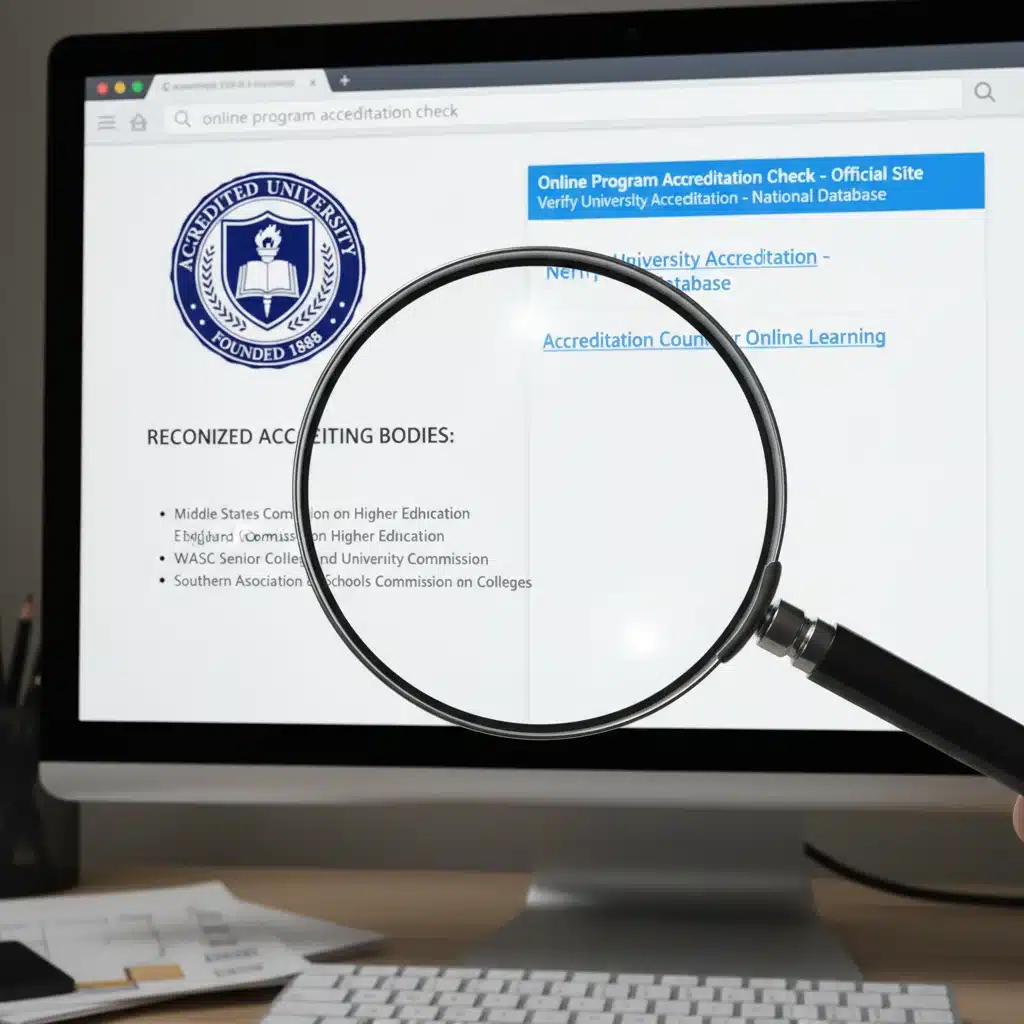
The USDE maintains a database of accredited postsecondary institutions and programs. This is your first and most reliable stop. Visit the Database of Accredited Postsecondary Institutions and Programs (DAPIP). Search for the institution by name. If it’s not listed, or if the accrediting body isn’t recognized by the USDE, it’s a major red flag.
Step 2: Consult the Council for Higher Education Accreditation (CHEA)
CHEA is a non-governmental organization that reviews and recognizes accrediting agencies. While the USDE focuses on federal funding eligibility, CHEA focuses on academic quality. Cross-referencing an institution’s accreditor with CHEA’s Directory of CHEA-Recognized Accrediting Organizations provides an additional layer of verification.
Step 3: Verify Directly with the Accrediting Agency
Don’t just take the school’s word for it. Once you’ve identified the purported accrediting agency, visit their official website. Most legitimate agencies have a searchable database of the institutions and programs they accredit. Confirm that the institution and the specific online program you are interested in are listed and in good standing.
Step 4: Look for Accreditation Status, Not Just Membership
Some fraudulent institutions might claim ‘membership’ in an organization that sounds like an accrediting body but isn’t. Membership is not the same as accreditation. Always look for clear statements of accreditation status, specifying the recognized accrediting agency.
Step 5: Be Wary of ‘Accreditation Mills’
Accreditation mills are organizations that claim to accredit institutions but are not recognized by the USDE or CHEA. They essentially sell fake accreditation to diploma mills. If an accrediting body sounds unfamiliar or has a name that’s very similar to a legitimate one but slightly off, investigate it thoroughly through the USDE and CHEA databases.
Red Flags to Watch Out For When Evaluating Online Programs
Beyond checking for proper online degree accreditation, several other indicators can signal that an online program or institution might be less than legitimate. Be vigilant for these red flags:
- Guaranteed Degrees/No Coursework: Any institution promising a degree in an unrealistically short time, requiring minimal or no coursework, or offering degrees based solely on life experience (without robust assessment) is likely a scam.
- Lack of Transparency: Legitimate institutions are transparent about their faculty, curriculum, student services, and most importantly, their accreditation status. If this information is hard to find or vague, proceed with extreme caution.
- Unsolicited Offers: Be wary of emails or advertisements offering degrees that seem too good to be true, especially if they come unsolicited and promise quick, easy credentials.
- High Pressure Sales Tactics: Legitimate institutions want you to make an informed decision. Those pressuring you to enroll immediately or pay exorbitant fees without proper research are suspect.
- Fees Instead of Tuition: While legitimate schools have fees, be suspicious if an institution primarily charges ‘fees’ for a degree rather than tuition based on credit hours or courses.
- Generic Email Addresses: Official communications should come from institutional email addresses (e.g., @universityname.edu), not generic ones like Gmail or Yahoo.
- Poorly Designed Website/Materials: While not always definitive, a professional and well-maintained website and clear, error-free communication materials are hallmarks of a reputable institution.
- Lack of Physical Address/Contact Information: Even online institutions should have a verifiable physical address and accessible contact information beyond just an email form.
- Too Good to Be True Pricing: While online education can be more affordable, extremely low prices for a degree that typically costs significantly more can be a sign of a diploma mill.
The Future of Online Degree Accreditation in 2026 and Beyond
The landscape of online degree accreditation is not static. In 2026, we can expect continued evolution driven by technological advancements, changing employer needs, and a greater emphasis on competency-based education.
- Emphasis on Outcomes: Accrediting bodies are increasingly focusing on student learning outcomes and career readiness, rather than just inputs like faculty credentials or library resources. This means online programs will need to demonstrate tangible results for their graduates.
- Innovation in Assessment: As AI and data analytics become more sophisticated, accreditation processes may leverage these tools to assess program quality and student performance in new ways.
- Global Recognition: With the rise of international online education, there’s a growing need for greater harmonization and mutual recognition of accreditation standards across borders.
- Micro-credentials and Stackable Programs: The demand for shorter, more focused educational experiences (like certificates and bootcamps) is increasing. Accrediting bodies are adapting to evaluate these micro-credentials and how they can ‘stack’ towards full degrees.
- Adaptive Learning Technologies: As online learning platforms become more personalized and adaptive, accreditation will need to ensure these technologies are used effectively and ethically to enhance learning, not just streamline delivery.
Staying informed about these trends will further empower you to choose an online degree that remains relevant and valuable in the years to come.
Maximizing the Value of Your Accredited Online Degree
Once you’ve secured your accredited online degree, how do you ensure it truly maximizes your career potential? It’s not just about having the piece of paper; it’s about what you do with it.
1. Leverage Your Network
Accredited online programs often come with robust alumni networks and career services. Engage with these resources. Networking with peers, faculty, and alumni can open doors to internships, mentorships, and job opportunities.
2. Showcase Your Online Learning Skills
Completing an online degree demonstrates a unique set of valuable skills to employers: self-discipline, time management, digital literacy, and independent learning. Highlight these on your resume and in interviews. Frame your online experience as an asset, showcasing your adaptability and comfort with virtual collaboration.
3. Continuously Update Your Skills
The world changes rapidly. Your degree is a foundation, not a finish line. Commit to lifelong learning through professional development courses, certifications, and staying current with industry trends. An accredited degree makes it easier to pursue these further educational opportunities.
4. Build a Strong Digital Portfolio
Especially for creative or technical fields, a strong digital portfolio showcasing projects, papers, and accomplishments from your accredited online program can be far more impactful than just a transcript. This demonstrates practical application of your knowledge.
5. Seek Professional Certifications
Many fields have professional certifications that complement a degree. An accredited degree often serves as a prerequisite or provides the foundational knowledge needed to pass these certification exams, further enhancing your marketability.
Common Misconceptions About Online Degree Accreditation
Let’s debunk a few persistent myths surrounding online degree accreditation that can lead to confusion:
- Myth: Online Degrees are Inherently Less Credible. This is an outdated notion. An online degree from a regionally accredited institution holds the same weight and recognition as its on-campus counterpart. The mode of delivery does not diminish its value if the accreditation is sound.
- Myth: All Online Programs from Accredited Schools are Equal. While institutional accreditation is vital, the quality can still vary between programs within the same university. Always check for programmatic accreditation if applicable and research specific program outcomes.
- Myth: Accreditation is a One-Time Event. Accreditation is an ongoing process. Institutions must regularly undergo review to maintain their accredited status, ensuring continuous quality improvement.
- Myth: International Accreditation is the Same as U.S. Accreditation. While many countries have robust accreditation systems, they are not always directly interchangeable. If you plan to work or study internationally, research the specific recognition requirements in your target country.
- Myth: For-Profit Schools Cannot Be Accredited. While some for-profit schools have faced scrutiny, many are legitimately accredited by recognized agencies and offer quality education. The key is to check their accreditation status, not their profit model.
Conclusion: Your Empowered Path to an Accredited Online Future in 2026
As we navigate 2026 and beyond, online education will continue to be a powerful force for personal and professional development. However, the onus is on you, the prospective student, to be diligent and informed. Prioritizing online degree accreditation is not just a recommendation; it’s a non-negotiable step in safeguarding your investment and securing a future where your credentials are truly valued.
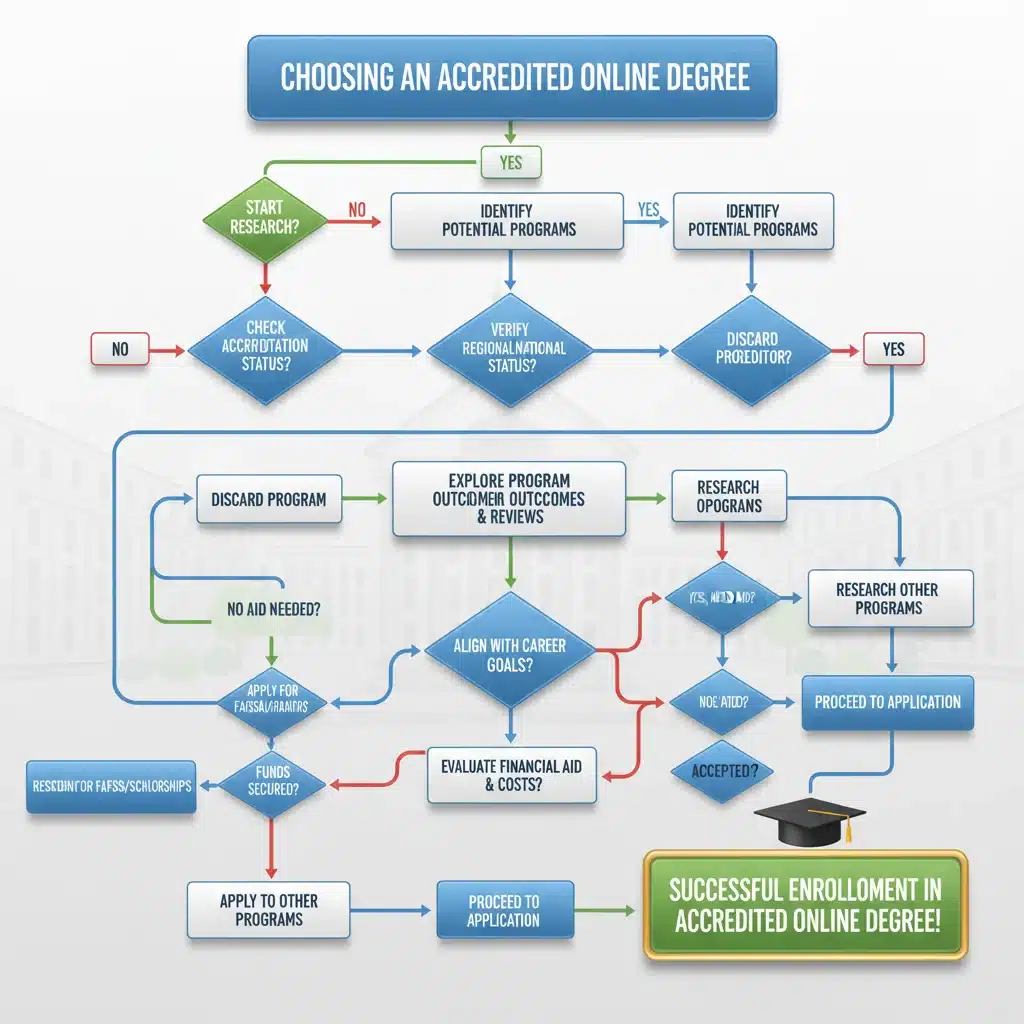
By understanding the types of accreditation, utilizing official verification resources, and recognizing warning signs, you can confidently choose an online program that aligns with your goals and provides a legitimate, high-quality education. Your future success depends on making this critical distinction. Invest wisely, verify diligently, and embark on your accredited online learning journey with confidence.