2026 Federal Reserve Interest Rate Forecast: Mortgage & Loan Impact
Anúncios
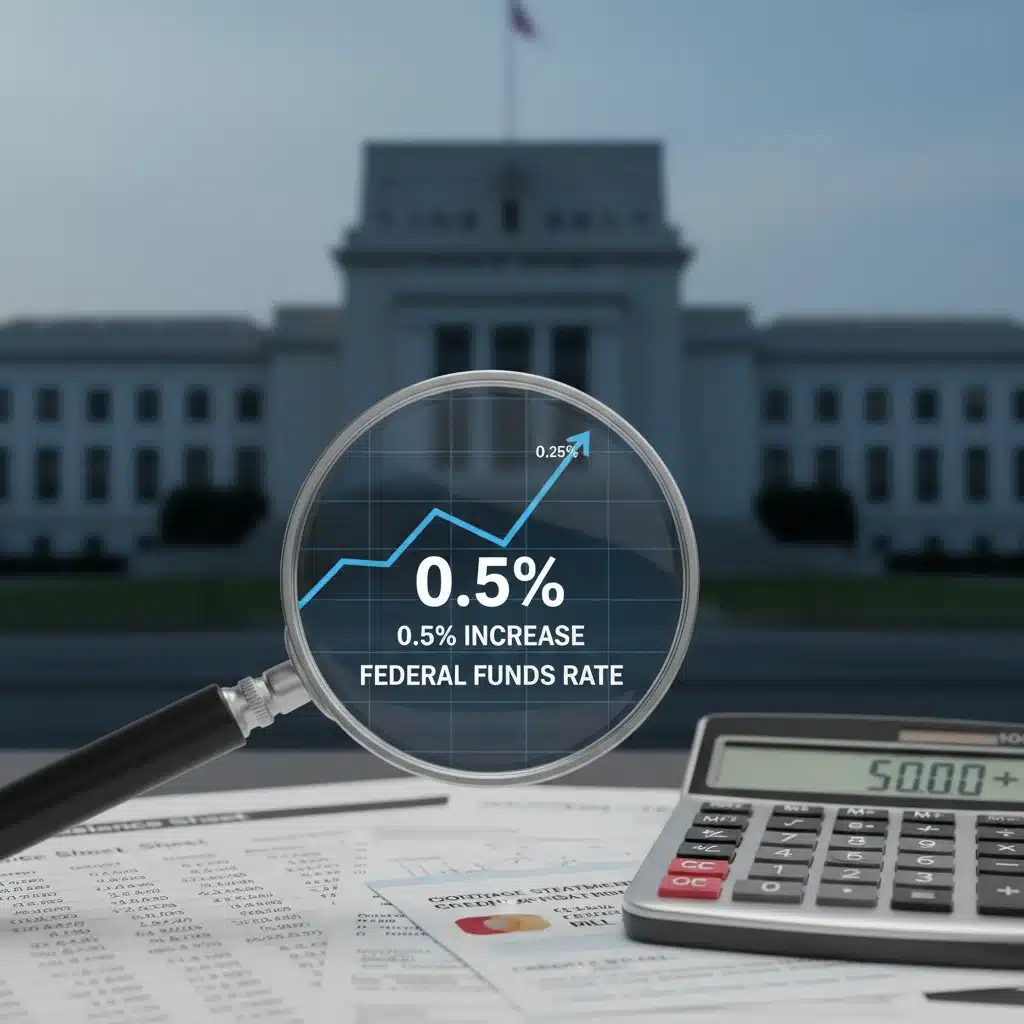
The 2026 Federal Reserve Interest Rate Forecast: How a Projected 0.5% Increase Impacts Your Mortgage and Loan Payments This Year
Understanding the future trajectory of interest rates is not merely an exercise for economists; it’s a critical component of personal financial planning for every American. As we look ahead to the 2026 interest rate forecast, the whispers of a potential 0.5% increase from the Federal Reserve are growing louder. This isn’t just a headline for financial news; it’s a pivotal piece of information that could directly influence your household budget, from the monthly mortgage payment to the cost of financing a new car or even your credit card interest. The implications of the Federal Reserve’s monetary policy decisions resonate across all sectors of the economy, but perhaps nowhere more acutely than in the realm of consumer credit.
Anúncios
The Federal Reserve, often referred to as ‘the Fed,’ plays a crucial role in maintaining economic stability. Its primary tools include adjusting the federal funds rate, which in turn influences a cascade of other interest rates throughout the economy. When the Fed signals a change, particularly an increase, it sets off a chain reaction that impacts everything from the cost of borrowing for businesses to the interest you earn on your savings account. For individuals and families, this means a careful re-evaluation of current debt, future borrowing plans, and overall financial strategy. The 2026 interest rate forecast, specifically the potential for a 0.5% hike, demands our attention and proactive planning.
This comprehensive guide will delve deep into the anticipated 2026 Federal Reserve interest rate forecast, breaking down what a 0.5% increase truly means for your personal finances. We’ll explore the historical context of Fed decisions, analyze the economic indicators driving these projections, and most importantly, equip you with actionable strategies to mitigate the impact on your mortgages, auto loans, personal loans, and credit card debt. By understanding the intricate dance between the Fed’s policy and your wallet, you can position yourself to navigate these financial shifts with confidence and foresight.
Anúncios
Understanding the 2026 Federal Reserve Interest Rate Forecast
The 2026 interest rate forecast is a complex projection, built upon a multitude of economic indicators and the Federal Reserve’s ongoing assessment of the nation’s financial health. The Fed’s primary mandate is to achieve maximum employment and stable prices, often referred to as the ‘dual mandate.’ To fulfill this, they employ monetary policy tools, with the federal funds rate being the most prominent. This rate is the target for overnight lending between banks, and changes to it ripple through the entire financial system, affecting everything from prime rates to consumer loan rates.
Several key factors contribute to the Federal Reserve’s interest rate decisions. Inflation, undoubtedly, is one of the most significant. If inflation remains stubbornly high or shows signs of resurgence, the Fed is more likely to raise rates to cool down the economy and bring prices under control. Conversely, a weakening economy or signs of deflation might prompt the Fed to hold rates steady or even consider cuts, though the latter seems less likely in the current 2026 projection scenario. Labor market data, including unemployment rates and wage growth, also plays a crucial role. A strong labor market might give the Fed more leeway to raise rates without fear of stifling economic growth too severely.
Global economic conditions, geopolitical events, and even domestic political stability can also influence the Fed’s outlook. For instance, supply chain disruptions, international trade tensions, or significant shifts in global demand can all feed into inflation or impact economic growth, thereby influencing the 2026 interest rate forecast. The projected 0.5% increase for 2026 isn’t a random number; it’s a carefully calculated response to these evolving economic landscapes, aiming to strike a balance between curbing inflation and supporting sustainable economic growth.
It’s important to remember that these forecasts are not set in stone. The Federal Reserve’s decisions are data-dependent, meaning they can adjust their stance based on new information. However, the current consensus among many economists and within the Fed’s own ‘dot plot’ projections points towards a measured increase in the coming years. This proactive communication from the Fed aims to provide transparency and allow businesses and consumers to prepare for future financial conditions. Therefore, understanding the rationale behind this projected 0.5% hike is the first step in preparing your finances for what lies ahead in the 2026 interest rate forecast.
Direct Impact on Your Mortgage Payments
For most homeowners, their mortgage is their largest financial obligation. A projected 0.5% increase in the federal funds rate by 2026 could have a tangible and significant impact on your monthly mortgage payments, depending on the type of loan you hold. The primary distinction lies between fixed-rate mortgages and adjustable-rate mortgages (ARMs).
If you have a fixed-rate mortgage, the good news is that your interest rate, and consequently your monthly payment, will remain unchanged regardless of the Fed’s actions. You locked in your rate at the time of your loan origination, providing stability and predictability. However, if you are considering purchasing a home or refinancing an existing mortgage in the lead-up to or during 2026, a 0.5% increase in the broader interest rate environment will likely translate to higher rates for new fixed-rate mortgages. This means a higher monthly payment for the same loan amount, making homeownership potentially more expensive for future buyers or those looking to refinance.
The situation is different and potentially more immediate for those with an adjustable-rate mortgage (ARM). ARMs have interest rates that periodically reset based on a specified index, which is often tied to the federal funds rate or other short-term rates that are influenced by Fed policy. A 0.5% increase in the benchmark rate could directly lead to an increase in your ARM’s interest rate when it next adjusts. For example, if your ARM is due to reset in late 2025 or 2026, and the Fed implements this projected hike, your monthly payment could rise. Even a seemingly small increase can add up over time, affecting your household budget significantly. It’s crucial for ARM holders to review their loan terms, understand their adjustment periods, and calculate the potential impact of a 0.5% increase on their specific loan.
Let’s consider a hypothetical example: a homeowner with a $300,000 adjustable-rate mortgage at a 4.0% interest rate. A 0.5% increase would push that rate to 4.5%. While the exact payment change depends on the remaining loan term and other factors, it could easily translate to an additional $80 to $100 or more per month. Over the course of a year, this could mean an extra $960 to $1200 in mortgage payments. This is a substantial amount that needs to be factored into your financial planning. Furthermore, the overall cost of borrowing for new home purchases will also rise. Lenders will pass on their increased cost of funds to consumers, making new mortgages more expensive. This could impact housing affordability and potentially cool down the housing market, a secondary effect of the 2026 interest rate forecast.

Impact on Auto Loans, Personal Loans, and Credit Cards
Beyond mortgages, the 2026 interest rate forecast and the potential 0.5% increase will also cast a wide net over other forms of consumer credit, including auto loans, personal loans, and credit card debt. Each of these financial products responds differently to changes in the federal funds rate, but the general trend is consistent: borrowing becomes more expensive.
For auto loans, the impact is primarily felt by new borrowers. If you’re planning to finance a car purchase in 2026 or beyond, expect to see slightly higher interest rates. Even a small increase of 0.5% can add hundreds of dollars to the total cost of the vehicle over the life of a typical 5-7 year loan. For example, on a $30,000 car loan over 60 months, a 0.5% rate hike from 5.0% to 5.5% could increase your monthly payment by approximately $7-8, totaling around $420-$480 more over the loan term. While this might seem less dramatic than mortgage increases, it still represents a higher cost of ownership that should be budgeted for. Existing fixed-rate auto loans will remain unaffected, similar to fixed-rate mortgages.
Personal loans, which can be either fixed or variable rate, will also see an impact. New personal loans taken out after the rate hike will likely carry higher interest rates. For those with existing variable-rate personal loans, the interest rate will adjust upwards according to the loan’s terms, leading to higher monthly payments. These loans are often used for debt consolidation or unexpected expenses, so an increase in their cost can add further strain to an already tight budget. Understanding your loan’s terms, particularly if it’s a variable rate, is crucial to anticipating these changes.
Perhaps the most immediate and widespread impact of a 0.5% rate hike will be on credit card debt. The vast majority of credit cards have variable interest rates, which are directly tied to the prime rate, which in turn moves in lockstep with the federal funds rate. This means that as soon as the Federal Reserve implements an increase, your credit card’s Annual Percentage Rate (APR) will likely go up shortly thereafter. For consumers carrying a balance, this translates to higher interest charges and a longer time to pay off debt if only minimum payments are made. For someone with a $5,000 credit card balance at an average 20% APR, a 0.5% increase to 20.5% might seem minor, but it adds up over time, making it harder to escape the debt cycle. This makes paying down high-interest credit card debt even more critical in anticipation of the 2026 interest rate forecast.
Broader Economic Implications of a Rate Hike
The Federal Reserve’s decision to potentially raise interest rates by 0.5% in 2026 is not made in a vacuum; it’s a strategic move with broader economic implications that extend beyond individual loan payments. These decisions are designed to steer the economy toward stability, and understanding these larger effects can provide context for your personal financial planning.
One of the primary goals of raising interest rates is to control inflation. By making borrowing more expensive, the Fed aims to slow down consumer and business spending, which in turn reduces demand and helps to cool down rising prices. If the economy is overheating and inflation is a persistent concern, a rate hike acts as a brake. The 0.5% increase projected for 2026 suggests the Fed anticipates a need to continue its fight against inflation, or at least prevent its resurgence, ensuring price stability remains a priority.
However, there’s a delicate balance to strike. While higher rates can curb inflation, they can also potentially slow down economic growth. Businesses might defer expansion plans, reduce hiring, or cut back on investments if the cost of borrowing increases. This could lead to a slowdown in job creation and potentially impact overall economic output. The Fed’s challenge is to implement a rate hike that effectively tackles inflation without pushing the economy into a significant downturn. The 0.5% increase is often seen as a moderate adjustment, aiming for a ‘soft landing’ rather than an abrupt halt to economic activity.
Another significant area of impact is the stock market and investment landscape. Higher interest rates can make bonds and other fixed-income investments more attractive relative to stocks, as they offer better returns with lower risk. This can lead to a reallocation of capital, potentially causing stock market volatility or a slowdown in equity market growth. Companies that rely heavily on borrowing for growth may see their profitability squeezed by higher interest expenses, which can also affect their stock performance. For investors, this means a potential shift in strategy, favoring more conservative investments or companies with strong balance sheets that are less sensitive to interest rate fluctuations.
Finally, the exchange rate of the U.S. dollar can also be affected. Higher interest rates typically make a country’s currency more attractive to foreign investors, as they can earn better returns on their investments. This can lead to a stronger U.S. dollar, which has both positives and negatives. A stronger dollar makes imports cheaper for American consumers but makes U.S. exports more expensive for foreign buyers, potentially impacting trade balances. All these interconnected factors highlight the far-reaching consequences of the 2026 interest rate forecast and the Fed’s monetary policy decisions.
Strategies to Prepare for Higher Interest Rates
Given the 2026 interest rate forecast and the potential for a 0.5% increase, proactive financial planning is not just advisable; it’s essential. Taking steps now can help you mitigate the impact of higher rates on your personal finances and even turn potential challenges into opportunities. Here are several actionable strategies:
1. Prioritize High-Interest Debt Repayment
This is perhaps the most critical step, especially for credit card debt. Since credit card rates are typically variable and directly tied to the prime rate, any Fed hike will immediately increase your APR. Focus on paying down balances on credit cards and other high-interest variable-rate loans. Consider using strategies like the debt snowball or debt avalanche method. The less high-interest debt you carry, the less you’ll be exposed to rising interest costs. Even if you can’t eliminate it entirely, reducing your balances will lessen the burden of increased interest payments.
2. Refinance Existing Debt (If Applicable)
If you have an adjustable-rate mortgage (ARM) or a variable-rate personal loan, now might be an opportune time to consider refinancing into a fixed-rate loan. While current fixed rates might already be higher than historical lows, locking in a rate before the projected 0.5% increase in 2026 could save you money in the long run. Carefully weigh the closing costs of refinancing against the potential savings from avoiding future rate hikes. For auto loans, if you have a high-interest rate and good credit, refinancing to a lower fixed rate could also be beneficial, especially if the new rate is significantly better than your current one.
3. Evaluate New Borrowing Needs
If you anticipate needing to take out a new loan in the near future – whether for a home, car, or personal expenses – it might be wise to assess the timing. If rates are expected to rise, securing a loan sooner rather than later could mean a lower interest rate. However, always ensure that any new borrowing aligns with your overall financial goals and budget, regardless of interest rate movements. Avoid rushing into debt solely because of a forecast. For large purchases like a home, ensure you’re financially prepared for the commitment.
4. Build or Expand Your Emergency Fund
An adequate emergency fund is always a cornerstone of sound financial planning, but it becomes even more crucial in an environment of rising interest rates. If your loan payments increase, having a buffer of 3-6 months (or more) of living expenses can prevent you from resorting to high-interest credit cards to cover shortfalls. This fund provides financial resilience against unexpected expenses or income disruptions, allowing you to absorb higher debt service costs without undue stress.
5. Explore Savings and Investment Opportunities
While rising rates make borrowing more expensive, they can also make saving more rewarding. High-yield savings accounts, Certificates of Deposit (CDs), and money market accounts typically offer better returns when the Fed raises rates. Re-evaluate where you keep your emergency fund and other savings to ensure you’re maximizing your interest earnings. For investors, consider diversifying your portfolio to include assets that perform well in a rising rate environment, such as certain types of bonds or dividend-paying stocks, after consulting with a financial advisor.
6. Review and Adjust Your Budget
Take a close look at your current budget. Identify areas where you can cut discretionary spending to free up funds. This extra cash can then be directed towards paying down debt or bolstering your savings. Even small adjustments can make a significant difference over time, helping you absorb potential increases in loan payments without sacrificing essential expenses. A detailed budget review is a powerful tool for navigating the 2026 interest rate forecast.

Long-Term Outlook and Expert Opinions
While the 2026 interest rate forecast centers on a potential 0.5% increase, it’s crucial to consider the broader long-term outlook for interest rates and the economy. The Federal Reserve’s monetary policy is not a static entity; it’s a dynamic response to evolving economic conditions. Understanding the potential trajectory beyond 2026 can help in crafting robust, long-term financial plans.
Many economists and financial analysts project a period of continued vigilance from the Federal Reserve, potentially with further measured rate adjustments in the years following 2026, depending on inflation and growth metrics. The expectation is that the Fed will continue to aim for a ‘neutral’ interest rate – a rate that neither stimulates nor restricts economic growth – which may still be higher than the rates seen in the immediate post-pandemic era. This suggests that the era of ultra-low interest rates might be largely behind us, and consumers should adapt to a new normal of potentially higher borrowing costs.
Expert opinions vary, but a consensus often emerges around the idea that the Fed will remain data-dependent. Key indicators like the Consumer Price Index (CPI), Personal Consumption Expenditures (PCE) price index, GDP growth, and employment figures will be closely watched. If inflation proves more persistent than anticipated, or if global economic shocks occur, the Fed’s actions could deviate from current forecasts. Conversely, if economic growth slows sharply and inflation is well under control, the Fed might pause or even consider rate cuts, though this is a less likely scenario for 2026 based on current projections.
The impact of this long-term outlook extends to various aspects of financial life. For example, retirement planning becomes more nuanced. Higher interest rates can be beneficial for retirees relying on fixed-income investments, as they can earn more on their savings. However, for those still in the accumulation phase, higher rates could impact the cost of borrowing for investments or business ventures. The housing market could also see sustained adjustments, with affordability remaining a key challenge if rates stabilize at higher levels.
Financial advisors often emphasize the importance of flexibility and diversification in such an environment. Regularly reviewing your investment portfolio, debt structure, and overall financial goals in light of the evolving interest rate landscape is paramount. Staying informed about the Federal Reserve’s communications and economic reports will be key to making timely and informed decisions. The 2026 interest rate forecast is a crucial data point, but it’s part of a larger, ongoing economic narrative that requires continuous attention and adaptation.
Conclusion: Navigating the Future of Interest Rates
The 2026 Federal Reserve interest rate forecast, with its projected 0.5% increase, serves as a significant marker for individuals and families across the United States. While the exact timing and magnitude of future rate adjustments are always subject to economic shifts, the current projections provide a clear signal: prepare for a financial landscape where borrowing costs may be higher than what many have grown accustomed to over the past decade.
The implications of this forecast are far-reaching. From potentially higher monthly payments on adjustable-rate mortgages and personal loans to increased costs for new auto loans and, most notably, greater interest charges on credit card balances, every facet of consumer credit stands to be affected. Beyond individual finances, these changes ripple through the broader economy, influencing inflation, economic growth, and investment opportunities.
However, knowledge is power. By understanding the mechanisms behind the Federal Reserve’s decisions and the direct impact on your specific financial products, you are better equipped to take proactive steps. Prioritizing the repayment of high-interest debt, strategically refinancing existing loans, carefully evaluating new borrowing needs, and bolstering your emergency savings are all vital strategies. Moreover, adjusting your budget and exploring new savings and investment opportunities can help you not only weather the changes but potentially thrive in this evolving economic environment.
The future of interest rates is not a static prediction but a dynamic interplay of economic forces and policy responses. Staying informed, exercising financial prudence, and adapting your strategies will be key to successfully navigating the challenges and opportunities presented by the 2026 interest rate forecast and beyond. By taking action today, you can secure a more stable and predictable financial future for yourself and your family.